Your company’s server closet made sense when you had three servers. Now you have three racks, two compliance audits on the calendar, and a CTO who keeps mentioning “uptime SLAs.” That is the moment most growing businesses discover private cage colocation and wish they had found it sooner.
The data center colocation market has grown rapidly, expanding from $78.01 billion in 2025 to a projected $90.48 billion in 2026 at a compound annual growth rate of 16%. That acceleration tells a clear story: businesses of every size are moving their hardware out of on-premises closets and into professionally managed facilities. Among the available colocation options, the private colocation cage stands out as the sweet spot for organizations that have outgrown a single rack but do not yet need a fully walled-off private suite.
This guide explains exactly what a private cage is, how it compares to your alternatives, what it costs in 2026, and how to decide whether it is the right move for your infrastructure right now.
Key Takeaways
- Private cages offer a middle-ground security tier: Cage colocation is often chosen to balance cost and isolation, cheaper than a private room but significantly more secure than standard colocation. If you need more than a shared rack but cannot justify a full suite, a cage is your answer.
- Compliance frameworks prefer physical perimeters: For HIPAA, PCI-DSS, and FedRAMP environments, a private cage gives your auditor a clear physical boundary and a documented, controllable access policy. Plan your cage around your next audit cycle, not your current rack count.
- The market is tightening fast: Data center vacancy rates remain near historic lows. According to CBRE, the overall vacancy rate in primary North American markets fell to a record-low 1.4% at year-end 2025. Secure your cage capacity now before negotiating leverage disappears entirely.
- Cages scale without migrations: A cage allows for “expansion in place.” By securing a perimeter that includes vacant floor space, you can deploy new racks instantly as your needs grow. That eliminates the costly downtime associated with relocating hardware to a new section of the facility floor.
- Pricing is more nuanced than the headline rate suggests: The widely cited U.S. colocation average of $195.94 per kW per month in H2 2025 is a base capacity rate covering space and rent only; the all-in rate, once power and services are factored in, is closer to approximately $250 per kW per month for most deployments. Always request an all-in quote before comparing providers.
Quick-Start Prioritization Framework
| Colocation Option | Best For | Effort to Set Up | Time to Results |
|---|---|---|---|
| Shared rack | Early-stage, 1-4 servers, tight budget | Low | Days |
| Private colocation cage | Growing teams, 5+ racks, compliance needs | Medium | 1-3 weeks |
| Private suite | Large enterprise, maximum isolation, custom cooling | High | Weeks to months |
Start here if you’re:
- A growing SMB with compliance obligations: Choose a private cage; it delivers the documented physical access controls that HIPAA and PCI-DSS auditors require without the cost of a fully walled suite.
- Planning to add racks over the next 1-3 years: Reserve cage perimeter space now so you can expand in place rather than migrating hardware later.
- On a shared rack today but bumping into neighbors: Move to a private cage to eliminate the “physical noisy neighbor” problem and regain control over who touches your equipment.
What Is a Private Cage in a Colocation Data Center?
The Core Definition
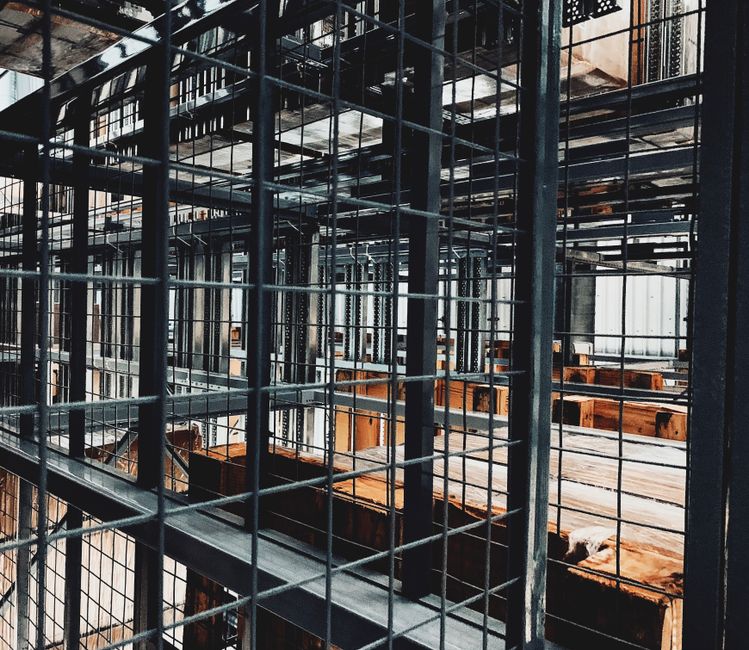
Cage colocation involves renting a dedicated, enclosed space, typically with mesh walls, within a data center for your exclusive use. Think of it like renting a locked storage unit inside a large, professionally managed warehouse. The warehouse owner handles the building’s electricity, climate control, fire suppression, and security. You control everything inside your locked unit.
A colocation cage is a customizable, multi-rack environment with restricted physical access that provides a dedicated perimeter for your hardware, serving as a secure area within a shared data center floor and offering a significant upgrade over standard rack-level hosting.
How It Differs from a Shared Rack
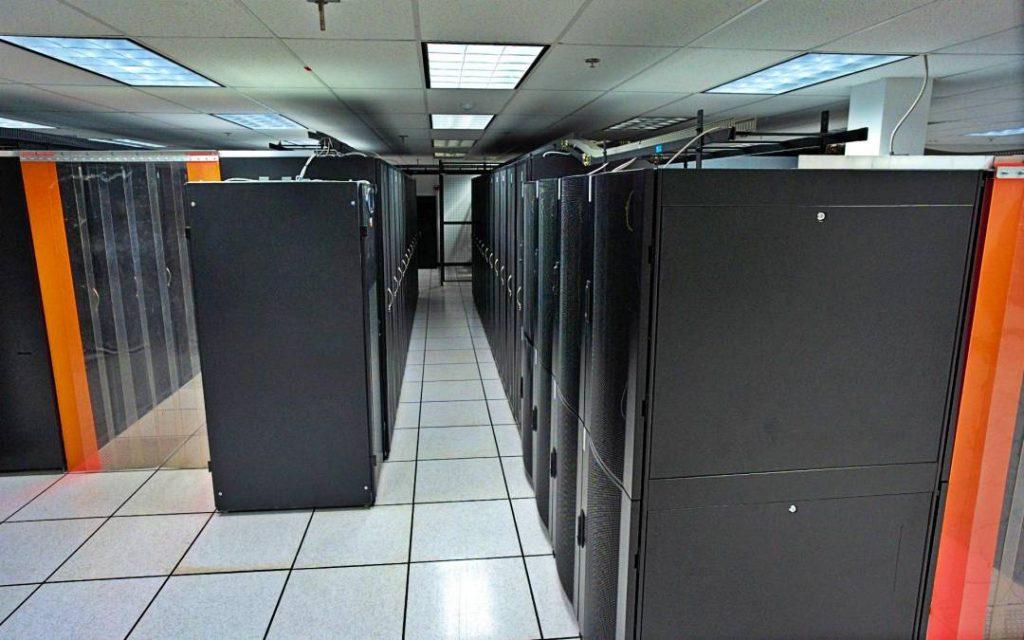
In data center colocation, a cabinet is a single, lockable rack within a shared data hall, perfect for small, cost-effective deployments. The key difference with a private colocation cage is the perimeter itself. In a shared rack row, other tenants’ technicians work within arm’s reach of your equipment. A cage removes that exposure entirely.
By utilizing floor-to-ceiling wire mesh partitions, a cage isolates your equipment from other tenants while maintaining the benefits of the facility’s shared cooling and power infrastructure. You keep access to the provider’s redundant power feeds and cooling; you simply add an exclusive physical boundary around your hardware.
How It Differs from a Private Suite
A colocation cage uses floor-to-ceiling wire mesh to isolate your hardware on a shared data center floor, while a private suite is a fully enclosed room with solid walls. The main trade-off between a cage and a suite is cost versus absolute sovereignty; suites offer dedicated cooling and lighting, while cages share the facility’s ambient environmental systems, making cages a more cost-efficient option for most high-density deployments.
Pro Tip: If you are evaluating a private suite because you need strict compliance, ask your auditor first. While HIPAA and PCI-DSS standards do not explicitly mandate a private cage, they do require strict physical access controls, and a private cage simplifies compliance by providing a documented, isolated perimeter that satisfies auditor requirements. A cage often meets the bar at a significantly lower price point.
The Security Architecture of a Private Cage
Layered Physical Access Controls
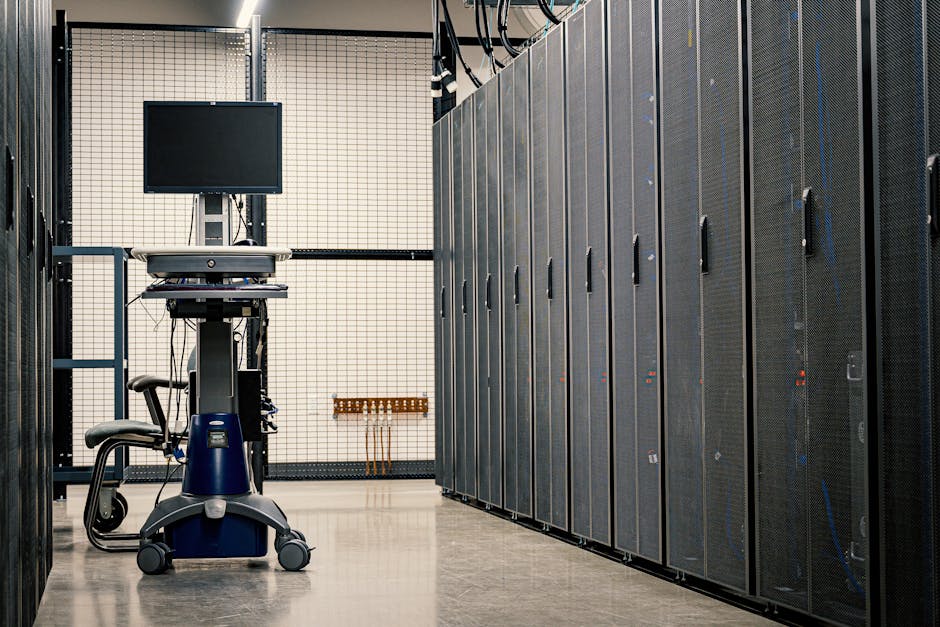
Security in a private cage environment works in layers. Access control moves beyond simple physical keys to cage-level biometric or RFID authentication, creating a multi-layered defense: first at the facility entrance, then at the cage door, and finally at the rack itself.
The system generates detailed access logs and digital audit trails for every entry, logs that provide undeniable proof of physical safeguards that compliance officers look for during annual audits and regulatory reviews. In practice, that means your security team can produce a timestamped record of everyone who entered your cage, without relying on a data center employee to track it manually.
Eliminating the “Physical Noisy Neighbor” Problem
In my experience advising businesses on infrastructure choices, the physical noisy neighbor problem is the most underestimated risk of shared rack colocation. As your infrastructure grows, you face the physical reality of a shared data center floor: in standard rows, technicians from other companies are constantly working inches away from your racks.
A private cage creates a discrete locked perimeter that separates one tenant’s equipment from the rest of the facility, helping prevent unauthorized access, accidental interference, or malicious activity. Even an inadvertent cable pull by a neighboring tenant’s engineer is now impossible.
Compliance Benefits You Can Document
Cages simplify compliance by creating a clearly defined physical boundary that satisfies physical access controls in frameworks like PCI-DSS v4.x and HIPAA. For businesses in healthcare, financial services, or any regulated industry, that documented boundary is worth a great deal at audit time.
HIPAA’s physical security rule requires that only authorized personnel access systems containing Protected Health Information (PHI). In shared cabinet colocation, multiple clients store equipment in the same physical enclosure, giving everyone with cabinet access access. This arrangement inherently violates HIPAA compliance standards. A private cage resolves this by giving your organization sole control over the access list.
Datacate’s Rancho Cordova facility carries HIPAA, SOC 2 Type II, SOC 3, and CSA STAR compliance certifications, assuring a compliant and secure environment for all data and service types.
Scalability: How a Private Cage Grows With You
Expansion In Place
Cage colocation is highly scalable; instead of moving to a new data center or a completely different setup, you can add more racks or cabinets inside the same cage and upgrade power and cooling capacity as needed.
This “expansion in place” capability is where cages deliver their most underappreciated value. With a shared rack arrangement, adding capacity often means migrating to a non-adjacent rack somewhere else on the floor, a process that carries real downtime risk and labor cost. Inside your cage perimeter, adding a new rack is logistically straightforward.
This scalability is useful for businesses that experience rapid growth, seasonal spikes, or evolving workloads, for example, AI training clusters or expanding game-server networks.
Reserving Space for Future Growth
Standard cages typically accommodate between 5 and 20 racks, depending on the facility’s floor grid. However, these spaces are highly customizable and can scale to much larger footprints if your IT strategy requires it.
Pro Tip: When signing your cage agreement, negotiate for vacant floor space inside the perimeter beyond your current rack count. With North American data center vacancy rates at a record low of 1.4%, securing this expansion space now is a vital hedge against future inventory shortages, and planning for a 3-5 year growth cycle is much simpler within a cage environment. Space you reserve today will cost far less than emergency expansion in a tight market tomorrow.
Datacate’s colocation services offer scalable options, from individual server racks to dedicated private cages and suites, so clients can quickly scale their physical footprint as needed.
Private Cage Colocation Costs in 2026
How Pricing Is Structured
Colocation pricing is built on three main components: physical space (measured in rack units or cabinets), power consumption (measured in kilowatts), and cross-connects (the cables linking your equipment to your network). For private cages specifically, most providers quote on a per-kW basis once your deployment reaches multi-rack scale.
Private cage pricing reflects dedicated infrastructure, a locked enclosure, custom power allocation, and controlled access, rather than a premium for convenience. Understanding that distinction helps you evaluate whether a cage quote is fair: you are paying for the perimeter, the exclusive power allocation, and the access-control infrastructure, not simply the mesh walls themselves.
2026 Market Rate Benchmarks
Market-typical 2026 rates run roughly $75 to $150 per rack unit, $400 to $900 for a half cabinet, and $900 to $2,500 for a full 42U cabinet at 3 to 5 kW in a Tier III facility, with larger deployments priced per kilowatt rather than per cabinet, commonly $150 to $235 per kW per month in North America. If your cage quote falls within those ranges for your market, it is in the right neighborhood.
The most affordable major U.S. market is Atlanta, where pricing rose about 2% year over year in early 2026, while Silicon Valley is the most expensive major U.S. market, where volume discounts have been reduced or eliminated as demand stays strong. Secondary markets, including Sacramento, generally price below primary coastal hubs, which is a meaningful advantage for businesses with flexible location requirements.
Pro Tip: Conflating the base capacity rate with the all-in rate is one of the most common budgeting mistakes buyers make. Always ask for a line-itemized quote that separates space, power, cross-connects, remote hands, and any setup fees so you can compare providers on equal footing.
Cage vs. Suite: The Cost Trade-Off
Private cages generally cost more monthly than standard cabinet colocation because of the dedicated floor space and mesh enclosure. However, they are significantly more affordable than private suites. One of the primary benefits of private cage colocation is the long-term ROI, as it eliminates the need for costly hardware migrations and re-cabling projects as your infrastructure scales.
Think of it like this: the premium you pay for a cage over a shared rack is an investment in avoiding the far more expensive disruption of a forced hardware migration at the worst possible moment.
Common Mistakes to Avoid When Choosing a Private Cage
Underestimating Power Requirements
Colocation pricing in 2026 is influenced by space, power usage, bandwidth, and geographic location, with power availability having overtaken floor space as the binding constraint in many primary markets. This means signing a cage agreement without accurately modeling your power draw is one of the costliest mistakes you can make. Calculate your actual electrical load per device before signing, not just your current load, but your projected load for the next two to three years.
Choosing a Cage Without Checking Compliance Scope
When evaluating certifications, examine the scope carefully: does the certification apply to the specific facility you’re considering? Does it cover the services you’ll be using? A provider might have excellent certifications for its primary location that don’t extend to secondary or satellite facilities.
Waiting Too Long to Secure Space
North American data center vacancy fell to a record 1.4% at year-end 2025, according to CBRE’s North American Data Center Trends H2 2025 report. Tight supply means faster price escalation and less room for negotiation, making upfront pricing intelligence essential. Businesses that wait until they are desperate for cage space will have far fewer options and a much weaker negotiating position. Start evaluating providers before you need to move.
Frequently Asked Questions
What is a private cage in a colocation data center?
A private cage is a dedicated fenced-off area that accommodates multiple cabinets, providing enhanced physical security and flexibility to meet growing needs and requirements. It sits inside a larger shared data center facility but is accessible only to your authorized personnel, with its own locking mechanism, access controls, and audit trail. It gives you the operational benefits of a professional data center without the capital expense of building and running your own.
How many racks fit in a private colocation cage?
Options range from small 4-rack enclosures to expansive setups, tailored to power, space, and layout requirements in Tier 3 and above facilities. Most standard cage footprints accommodate 5 to 20 racks, but providers can typically customize cage dimensions to match your specific hardware count and power-density requirements. Always negotiate a perimeter slightly larger than your current needs to preserve room for in-place expansion.
Is a private cage required for HIPAA or PCI-DSS compliance?
HIPAA and PCI-DSS standards do not explicitly mandate a private cage, but they do require strict physical access controls. A private cage simplifies compliance by providing a documented, isolated perimeter that satisfies auditor requirements. For most regulated organizations, a private cage is the most practical and cost-efficient way to demonstrate the documented physical access controls those frameworks demand. For PCI-DSS environments requiring physical separation between in-scope and out-of-scope systems, a private cage is the cleaner solution, and for HIPAA, PCI-DSS, and FedRAMP environments, a private cage gives your auditor a clear physical boundary and a documented, controllable access policy.
How does private cage pricing work in 2026?
Cage pricing is typically calculated per kilowatt for deployments of five or more racks. In 2026, that means roughly $150 to $235 per kW once a deployment is large enough for a wholesale quote. Smaller cage footprints may be quoted per square foot or per cabinet instead. Always request an all-in quote that includes power delivery, cross-connects, and any access control or setup fees; the base rate alone understates your true monthly cost.
How is a private cage different from renting a private suite?
A private cage is a dedicated fenced-off area that accommodates multiple cabinets, providing enhanced physical security and flexibility. A private suite, by contrast, is a completely private, walled-off room providing the highest level of security, isolation, and extensive customization for large, sensitive deployments. The practical difference: a cage uses mesh walls and shares the facility’s ambient cooling and power infrastructure, while a suite has solid walls and often features dedicated cooling. Cages cost significantly less and suit most growing businesses well.
Is a Private Cage Right for Your Business?
After years of helping growing businesses make infrastructure decisions, I’ve found the private cage question usually answers itself once you look honestly at three factors: your current rack count, your next compliance audit, and your projected growth over the next three years.
A private cage is the right fit when you need more security and privacy than shared racks, anticipate growth and plan to add more racks over time, must meet compliance or audit requirements, and want to avoid the cost and complexity of a full private suite.
For Sacramento-area and Northern California businesses, Datacate’s colocation services offer configurations ranging from a single server to a private cage, with flexibility and reliability built into the infrastructure. The facility holds SOC 2 Type II and HIPAA certifications, making it a strong match for regulated industries that need documented physical security controls without committing to the cost of an enterprise suite.
The colocation market is tightening. Space is scarce, prices are rising, and the businesses that lock in their cage footprint today will have both the security and the scalability runway to grow without interruption.
Sources
- Cabinet, Cage, or Private Suite? A Definitive Guide, Inflect. Colocation space comparison guide. https://inflect.com/blog/cabinet-cage-or-private-suite-a-definitive-guide-to-data-center-colocation-for-your-business
- Cage Colocation, CoreSite. Overview of cage colocation services. https://www.coresite.com/colocation/cage-colocation
- Colocation Cage vs. Private Suite: The 2026 Enterprise Infrastructure Guide, 3EX Hosting. Comparison of cage and suite options for enterprises. https://www.3exhosting.com/colocation-cage-vs-private-suite-the-2026-enterprise-infrastructure-guide/
- Enterprise Benefits of Private Cage Colocation, 3EX Hosting. Security, scaling, and sovereignty analysis. https://www.3exhosting.com/benefits-of-private-cage-colocation-security-scaling-sovereignty/
- Colocation Pricing: What to Expect for Racks, Cabinets, and Cages in 2026, Inflect. 2026 pricing benchmarks and market data. https://inflect.com/blog/colocation-pricing-what-to-expect-for-racks-cabinets-and-cages-in-2026
- Colocation Pricing in 2026, Brightlio. Market rate analysis for racks, cabinets, and cages. https://brightlio.com/colocation-pricing/
- Colocation Pricing 2026: Real Cost Per Rack, Cabinet and kW, Miami Data Center. Regional pricing benchmarks. https://miamidatacenter.com/guides/colocation-pricing
- Compliance-Ready Colocation Providers, QuoteColo. HIPAA and PCI-DSS colocation compliance guide. https://www.quotecolo.com/compliance-ready-colocation-providers/
- Compliance in the Data Center: Meeting Regulatory Standards, Datacate, Inc. HIPAA, GDPR, and PCI-DSS colocation compliance. https://www.datacate.net/compliance-in-the-data-center-meeting-regulatory-standards/
- Data Center Colocation Market Report 2026, Research and Markets. Global colocation market size and growth forecast. https://www.researchandmarkets.com/reports/5767258/data-center-colocation-market-report
- CBRE North American Data Center Trends H2 2025, CBRE. Vacancy rates and pricing data for North American colocation markets. Referenced via https://brightlio.com/colocation-pricing/
- What Is Cage Colocation? Benefits and Use Cases, Vyom Cloud. Scalability and use case analysis for cage colocation. https://www.vyomcloud.com/blog/what-is-cage-colocation-benefits-use-case/
- Datacate Colocation, Rancho Cordova, CA, Datacate, Inc. Facility overview and compliance certifications. https://www.datacate.net/colocation/
- Datacate GCDC Facility, Datacate, Inc. Scalable cage and rack colocation in Sacramento. https://www.datacate.net/gcdc-facility/
- Private Colocation Cage Miami: The Enterprise Guide, 3EX Hosting. Physical security and compliance for cage environments. https://www.3exhosting.com/private-colocation-cage-miami-the-enterprise-guide-to-secure-infrastructure/