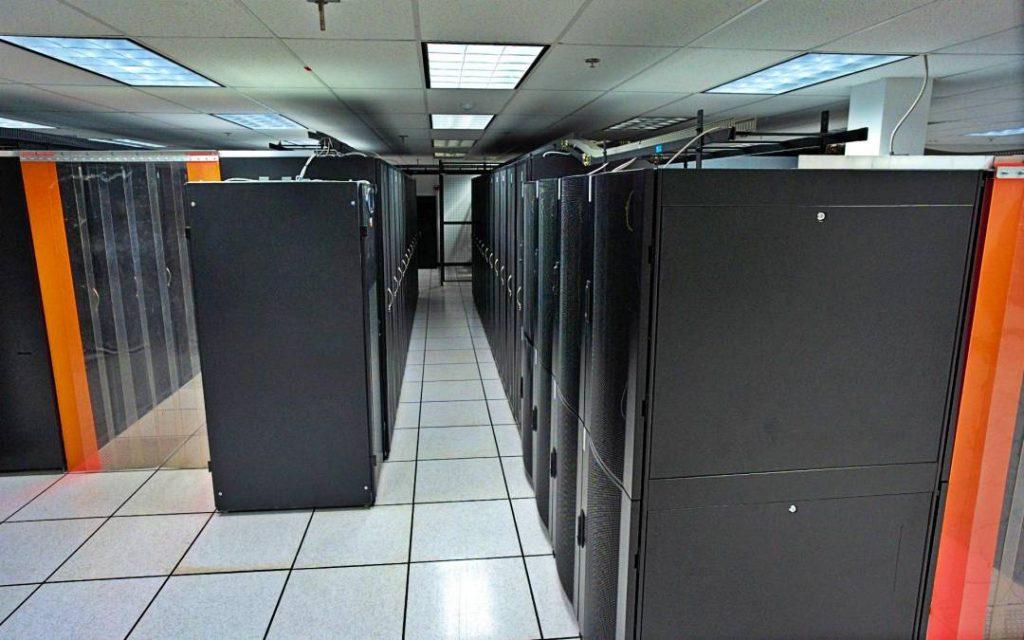
If your business colocates servers in a third-party data center, the security posture of that facility is inseparable from your own. According to the IBM 2025 Cost of a Data Breach Report, the global average cost of a data breach dropped to $4.44 million, but average costs in the U.S. surged to a record $10.22 million per incident, driven by increased regulatory fines and detection costs. When a breach originates at the infrastructure level, inside a facility you do not own or fully control, your organization bears the financial and reputational exposure.
SOC 2 certification is the clearest signal in the colocation market that a facility is secure rather than risky. This guide explains what SOC 2 is, how it compares to related frameworks, what it costs, and why your colocation provider’s SOC 2 Type II report deserves a place in every vendor evaluation checklist.
Key Takeaways
- SOC 2 is the baseline trust standard for US data center and cloud providers: Barr Advisory’s compliance framework guide notes SOC 2 is the smart choice for “enterprise systems housing third-party data, IT systems management and data center colocation facilities, and cloud service providers.” If your colocation provider cannot produce a current SOC 2 report, treat that as a red flag.
- Type II carries the real weight: According to ThreatLocker’s SOC 2 compliance guide, Type II “carries more weight with enterprise buyers and customers in regulated industries, who often require it as a condition of doing business.” Ask specifically for a Type II report, not just any SOC 2 document.
- SOC 2 adoption is growing fast: Enterprise buyers increasingly require SOC reports as a prerequisite for vendor partnerships, and a KPMG 2024 report shows a 23% increase in SOC 2 reports issued in 2023, reflecting the rising pressure vendors face to prove their compliance. Facilities without it are already losing enterprise contracts.
- Compliance costs are real but manageable: Vanta’s SOC 2 audit cost guide says SOC 2 audit fees typically run $10,000 to $50,000, with all-in first-year costs up to $80,000. When weighed against a potential $10 million breach, the investment is straightforward to justify.
- SOC 2 shifts security from subjective to evidence-based: SOC 2 transforms high-level principles into measurable, testable controls, shifting security from “we think we are secure” to “here is the evidence that we are secure,” according to ValueMentor’s SOC 2 compliance analysis.
Quick-Start Prioritization Framework
Use this table to decide which SOC 2-related action makes sense for your situation right now.
| Scenario | Recommended Action | Urgency | Expected Timeline |
|---|---|---|---|
| Evaluating a new colocation provider | Require a current SOC 2 Type II report before signing | Immediate | Before contract |
| Your current data center has only Type I | Ask for their Type II roadmap and renewal date | High | 30-60 days |
| Your datacenter has no SOC 2 | Issue a formal risk notice; begin evaluating alternatives | Critical | Now |
| Your own business needs SOC 2 | Start with a readiness/gap assessment | Moderate | 2-6 weeks to begin |
| Operating in a regulated industry | Confirm Security + Availability criteria are both covered | High | Before next audit cycle |
Start here if you are:
- A business in healthcare or financial services: Both industries face the highest breach costs, according to IBM’s findings, so demand SOC 2 Type II from every data center vendor. Confirm the report covers the Availability and Confidentiality Trust Services Criteria in addition to Security.
- A growing company signing enterprise deals: Enterprise procurement teams routinely gate vendor approvals on SOC 2 Type II documentation. Verify your colocation provider’s report is current and share it proactively.
- An IT or procurement manager doing a vendor review: Request the full SOC 2 Type II report, not a summary. Confirm the observation period is recent and that annual renewals are in place.
What SOC 2 Actually Is
The Framework Defined
SOC 2 (System and Organization Controls 2) is an auditing framework developed by the American Institute of CPAs (AICPA) that evaluates how well a service organization manages customer data based on five Trust Services Criteria: Security, Availability, Processing Integrity, Confidentiality, and Privacy.
Unlike prescriptive compliance frameworks like PCI DSS or HIPAA, SOC 2 is a flexible and customizable set of controls based on your business model and how you handle data. That flexibility is a feature, not a weakness. A colocation facility can tailor the criteria to reflect the services it actually provides while still producing a report that means something concrete to clients.
This evidence-based approach is why enterprise buyers, regulators, and investors increasingly treat SOC 2 as a baseline requirement in 2025. Colocation clients should treat it the same way.
The Five Trust Services Criteria
For a SOC 2 audit, organizations are evaluated against five Trust Services Criteria: Security, Availability, Processing Integrity, Confidentiality, and Privacy, with Security being the only mandatory criterion.
For a colocation data center specifically, the most relevant criteria are Security, Availability, and Confidentiality. According to Schellman’s guide to SOC reports for data centers, Availability assures clients that the data center has systems to minimize downtime, while Confidentiality confirms that controls are in place to prevent unauthorized access to sensitive information.
Pro Tip: When reviewing a colocation provider’s SOC 2 report, check which Trust Services Criteria are included. A report that covers only Security but omits Availability is a concern for any business whose systems require high uptime guarantees.
SOC 2 Type I vs. SOC 2 Type II: The Difference That Matters
What Type I Tells You
The fundamental difference is that Type I audits the design of security controls as of a specific date (suitability of design), whereas Type II evaluates both the design and the operating effectiveness over a defined audit period (operating effectiveness).
Type I is faster, typically completed in one to three months, and suits startups, organizations early in their compliance journey, or situations with a hard deal deadline. For a colocation provider, a Type I report is a starting point; it confirms the right controls are on paper. It does not confirm they work day in and day out.
Why Type II Is the Standard to Demand
Type II evaluates whether those controls actually worked consistently over an observation period of three to twelve months. The auditor reviews real-world evidence including access logs, incident responses, change management records, and monitoring data gathered across the full observation window.
While a Type I report can bridge urgent time pressure, SOC 2 Type II remains the market standard for enterprise clients and regulated industries. While a SOC 2 Type I report is a good starting point, many datacenter clients prefer the more comprehensive assurance a Type II report provides, and most enterprise procurement teams require it.
In practice: when a prospective enterprise customer asks for your SOC 2 report, they almost always mean Type II. The same standard applies when you are evaluating colocation providers.
SOC 1 vs. SOC 2 vs. SOC 3: Choosing the Right Report
How the Three Reports Differ
The primary difference between SOC 1, SOC 2, and SOC 3 is their focus and audience. SOC 1 evaluates financial reporting controls for audit teams, SOC 2 assesses data security controls for enterprise customers, and SOC 3 provides a public-facing summary of a SOC 2 audit.
According to ThreatLocker’s SOC compliance explainer, SOC 1 focuses on internal controls over financial reporting, SOC 2 focuses on controls related to the five Trust Services Criteria, and SOC 3 is a simplified version of SOC 2 for a broader audience that can be shared publicly.
Which One Should Your Colocation Provider Have?
According to Roosa CPA’s compliance guide for colocation facilities, in the situation where a colocation or data center is performing services that are not relevant to internal controls over the financial reporting of its customers, the logical choice for attestation is the SOC 2 standard. Colocation and data centers not involved in financial reporting controls can meet their customers’ compliance requirements by obtaining a SOC 2 service auditor’s report.
Enterprise and regulated-industry clients require their data center and cloud providers to hold formal independent certifications as a condition of tenancy, contract, and regulatory approval. ISO 27001 and ISO 22301 are the minimum baseline for European and global enterprise procurement, while US clients and financial services operators also require SOC 2 Type II.
Pro Tip: Do not accept a SOC 3 report as a substitute for SOC 2 when doing vendor due diligence. Because the SOC 3 report does not go into as much detail as a SOC 2, SOC 3 reports usually will not satisfy the needs of your customers or their auditors, according to Secureframe’s SOC comparison guide.
SOC 2 vs. ISO 27001: Understanding the Difference
Two Respected Standards, Different Purposes
SOC 2 and ISO 27001 are both taken seriously and often discussed together. Understanding the distinction helps you evaluate what your colocation provider holds and why.
SOC 2 is a US-focused attestation report that evaluates service organization controls against the Trust Services Criteria, while ISO 27001 is an international certification that requires a comprehensive Information Security Management System (ISMS).
Geography still drives the default choice: SOC 2 leads in North America, while ISO 27001 carries more weight internationally, especially in the EU, according to Sprinto’s SOC 2 vs. ISO 27001 comparison.
Scope and Renewal Differences
A SOC 2 Type II audit evaluates operating effectiveness over a 3 to 12 month period, and most organizations renew their reports annually.
ISO 27001 certification has a three-year cycle and requires annual surveillance audits in years one and two, with a full recertification audit in year three.
According to DataGuard’s framework comparison, ISO 27001 typically costs 50% more than a SOC 2 report as it is a more rigorous compliance process. For US-based colocation clients, a current SOC 2 Type II report from an AICPA-certified auditor is the practical baseline to require.
What SOC 2 Compliance for a Colocation Facility Covers
Physical and Logical Controls
SOC 2 compliance for colocation involves third-party audits of a colocation provider’s controls across the five AICPA Trust Services Criteria. For enterprise tenants, a valid SOC 2 Type II report from their colocation provider confirms that the facility’s physical, logical, and operational controls have been independently tested over a minimum six-month observation period, providing assurance that critical workloads are protected against unauthorized access, downtime, and data leakage.
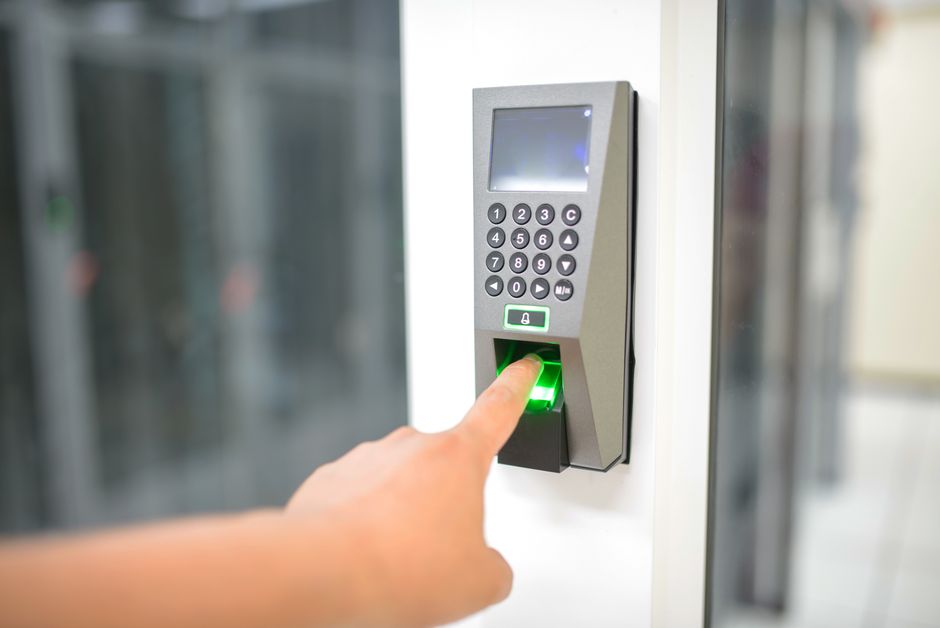
In practice, this means the auditor reviews physical entry controls, CCTV, authorized access procedures, environmental monitoring, incident response logs, change management records, and system availability data, all tested over months, not hours.
The Business Case for Requiring It
SOC 2 compliance is critical for data centers because they handle so much sensitive customer data. According to WIN Technology’s compliance overview, SOC 2 compliance provides a framework for secure data-processing policies.
Integrating SOC 2 requirements into procurement frameworks, regulatory guidance, and cyber insurance underwriting criteria is cementing its role as the de facto trust benchmark for colocation and data infrastructure services globally. That last point matters: cyber insurers are increasingly asking about the compliance posture of third-party vendors, including your colocation provider. A facility without SOC 2 Type II can affect your own insurance terms.
Pro Tip: Ask your colocation provider not just whether they have a SOC 2 report, but when the observation period ended and when it was last renewed. An expired report from two years ago provides much weaker assurance than a current one.
How to Get SOC 2 Compliance: A High-Level Roadmap
This section is relevant both for colocation providers pursuing SOC 2 and for businesses that need to understand what the process involves so they can evaluate provider claims intelligently.
Step 1: Determine Scope and Select Trust Services Criteria
The first step to becoming SOC 2 compliant is conducting a gap analysis to assess your current standing and identify what needs fixing before the audit. This involves reviewing systems, policies, and procedures to identify areas that don’t meet SOC 2 standards, per WorkOS’s SOC 2 compliance guide.
Step 2: Implement and Document Controls
Core requirements include developing and maintaining a formal information security program with documented policies and procedures.
Step 3: Run a Readiness Assessment
During a readiness assessment, the assessor walks through in-scope systems, processes, and controls and tests whether controls are designed appropriately, implemented and operating as described, and whether documentation, evidence, and ownership are clear, according to Secureframe’s SOC 2 audit checklist.
Step 4: Complete the Formal Audit
The last step is to engage an external auditor to review security systems and compliance posture. This process requires submitting evidence for various controls, procedures, and policies. For Type II, the auditor then issues the final report after the observation period concludes.
SOC 2 Cost: What to Budget
Most companies can expect to spend between $10,000 and $150,000 to prepare for and complete a SOC 2 audit, according to Secureframe’s SOC 2 audit cost guide. For small to medium businesses, SOC 2 Type I audits typically run $5,000 to $10,000, while Type II audits typically cost $30,000 to $70,000. Larger organizations and more complex environments should budget more. Annual renewals typically run 70 to 80 percent of the initial audit cost.
The math is clear: a Type II audit at even the upper end of the SMB range costs a fraction of the $10.22 million average US breach cost IBM reported for 2025.
Common Mistakes When Evaluating a Colocation Provider’s SOC 2 Status
Accepting a Type I Report as Sufficient
Type I confirms controls were designed correctly on one date. Type I does not validate that controls actually operated effectively over time. It proves design adequacy, not operational execution, according to Sage Audits’ SOC 2 comparison. Always ask for Type II.
Not Checking the Report’s Date
SOC 2 Type II reports require annual renewal. A report with an observation period that ended 18 months ago tells you very little about today’s security posture. Build a review of the report’s currency into your annual vendor assessment process.
Treating SOC 3 as the Same as SOC 2
SOC 3 reports cover the same ground as SOC 2 but are designed for public sharing. SOC 3 provides a summary of your security practices without revealing sensitive details about your specific controls. A colocation provider that offers only a SOC 3 report doesn’t provide the operational evidence you need for due diligence.
Frequently Asked Questions
What does SOC 2 compliance mean for a colocation data center?
SOC 2 compliance for colocation involves third-party audits of a provider’s controls across all five AICPA Trust Services Criteria. A valid SOC 2 Type II report confirms that the facility’s physical, logical, and operational controls have been independently tested over a minimum six-month observation period, providing assurance that critical workloads are protected against unauthorized access, downtime, and data leakage.
Is SOC 2 compliance mandatory?
SOC 2 compliance is not mandatory. It is a voluntary compliance standard that a potential client can request or that you can use to demonstrate a good-faith effort to meet administrative, physical, and technical safeguards. That said, enterprise buyers and regulated industries routinely require it as a condition of doing business, making it functionally mandatory for colocation providers that want to serve those markets.
What is the difference between SOC 1 and SOC 2?
SOC 1 focuses on internal controls over financial reporting. SOC 2 goes beyond finance and evaluates controls related to security, availability, processing integrity, confidentiality, and privacy. For most colocation clients, SOC 2 is the relevant report because it addresses the security and uptime concerns that matter when trusting a third party with your infrastructure.
How often does a SOC 2 Type II report need to be renewed?
SOC 2 Type II audits require annual re-audits. Organizations should budget for ongoing audit fees, continuous evidence gathering and monitoring, and regular policy reviews and control updates. When evaluating your colocation provider, ask for the most recent report and confirm when the next audit cycle begins.
How is SOC 2 different from ISO 27001?
A SOC 2 Type II audit evaluates distinctions in its output. ISO 27001 results in formal certification, while SOC 2 produces an attestation report, an auditor’s opinion on your controls. Both are credible frameworks, but SOC 2 is the standard most commonly required by US enterprise clients and US-based colocation operators.
Why Datacate and SOC 2 Type II Go Together
For businesses evaluating colocation in California, Datacate offers enterprise-grade colocation infrastructure. When evaluating any colocation provider, the questions are consistent: Does the facility hold a current SOC 2 Type II report? Which Trust Services Criteria are covered? When was the last observation period, and when does the next audit begin? These questions separate facilities that have made a documented, auditor-verified commitment to security from those that have not.
SOC 2 Type II certification is the most transparent answer a colocation provider can give to the question every client is really asking: “Can we trust you with our infrastructure?”
Sources
- IBM 2025 Cost of a Data Breach Report, IBM. Annual report on global and US data breach costs, causes, and mitigating factors. https://www.ibm.com/think/x-force/2025-cost-of-a-data-breach-navigating-ai
- SOC 2 Compliance Guide: Criteria and Compliance Process in 2026, Ace Cloud Hosting. Overview of SOC 2 requirements and Trust Services Criteria. https://www.acecloudhosting.com/blog/soc-2-compliance-guide/
- SOC 2 Compliance Requirements: Complete Guide, TryComp.ai. Detailed breakdown of SOC 2 criteria and automation levels. https://www.trycomp.ai/hub/soc-2-compliance-requirements
- SOC 2 Compliance: Type I and Type II Explained, ThreatLocker. Comparison of SOC 2 Type I and Type II reports. https://www.threatlocker.com/blog/soc-2-compliance-type-i-and-type-ii-explained
- SOC 1 vs. SOC 2 vs. SOC 3: A Detailed Comparison, Drata. Framework comparison table and use-case guidance. https://drata.com/learn/soc-2/vs-soc-1-vs-soc-3
- SOC 1 vs. SOC 2 vs. SOC 3: Key Differences and 2025 Guide, Rippling. Includes KPMG 2024 data on SOC 2 report volume growth. https://www.rippling.com/blog/soc-1-vs-soc-2-vs-soc
- SOC 2 vs. ISO 27001: Which Compliance Framework Best Fits Your Business?, Barr Advisory. Guidance on SOC 2 applicability to colocation facilities. https://www.barradvisory.com/resource/soc-iso-27001-which-best-fits/
- ISO 27001 vs. SOC 2: Understanding the Differences, Drata. Framework scope, timeline, and validity comparison. https://sprinto.com/blog/soc-2-type-2-report/
- SOC 2 vs ISO 27001: What’s the Difference?, DataGuard. Cost comparison and geographic applicability. https://www.dataguard.com/blog/soc-2-vs-iso-27001/
- SOC 2 vs ISO 27001, Sprinto. Detailed differences and decision guidance. https://sprinto.com/blog/soc-2-vs-iso-27001/
- How Much Does a SOC 2 Audit Cost?, Secureframe. Detailed breakdown of Type I and Type II audit pricing. https://secureframe.com/hub/soc-2/audit-cost
- SOC 2 Audit Costs in 2026, Bright Defense. SMB and enterprise cost ranges for SOC 2 Type I and II. https://www.brightdefense.com/resources/soc-2-audit-costs/
- How Much Does a SOC 2 Audit Cost?, Vanta. Cost ranges and seven pricing factors. https://www.vanta.com/collection/soc-2/soc-2-audit-cost
- SOC 2 Data Center Compliance and Why It Matters, Liberty Center One. Colocation-specific SOC 2 compliance overview. https://www.libertycenterone.com/blog/soc-2-data-center/
- Top Data Center Compliance Standards for Colocation, ServerMania. SOC 2 compliance requirements for data center operators. https://blog.servermania.com/colocation-data-center-compliance
- Compliance for Colocation Services and Data Centers, Roosa CPA. SOC 2 attestation guidance specific to colocation providers. https://roosacpa.com/colocation-services-data-centers/
- ISO 27001 and SOC 2 Certification for Data Centers, Baltum. Certification requirements for enterprise and regulated-industry colocation clients. https://baltum.org/industry-datacenters/
- SOC 2 Compliance for Colocation Market Research Report 2033, DataIntelo. Market analysis of SOC 2 adoption in colocation globally. https://dataintelo.com/report/soc-2-compliance-for-colocation-market
- SOC 2 Type I vs. Type II: Key Differences, Sage Audits. Operational vs. design-only assurance comparison. https://www.sageaudits.com/blog/2025/08/26/understanding-differences-soc-reporting-type-1-vs-type-2/
- Understanding SOC 2 Compliance for Data Centers, WIN Technology. Security framework for data center operators. https://www.wintechnology.com/blog/ensuring-data-protection-understanding-soc-2-compliance-for-data-centers/
- SOC 1 vs. SOC 2: Which SOC Report Do Data Centers Need?, Schellman. Guidance on availability and confidentiality criteria for colocation. https://www.schellman.com/blog/soc-examinations/do-data-centers-need-soc-1-or-soc-2
- How to Get SOC 2 Compliance: A Developer’s Guide, WorkOS. Step-by-step gap analysis and audit process. https://workos.com/guide/the-developers-guide-to-soc-2-compliance
- Your Step-by-Step SOC 2 Audit Checklist, Secureframe. Readiness assessment process and control testing criteria. https://secureframe.com/blog/soc-2-audit-checklist
- What Is SOC 2 Compliance and Why It Matters in 2025, ValueMentor. Evidence-based security posture analysis. https://valuementor.com/blogs/what-is-soc-2-compliance-and-why-it-matters-in-2025