Maybe you’re even sitting twenty feet away from it right now: that small, windowless room, originally designed to hold extra boxes of copier paper and a few spare chairs, that has been “upgraded” to house your entire company’s digital brain.
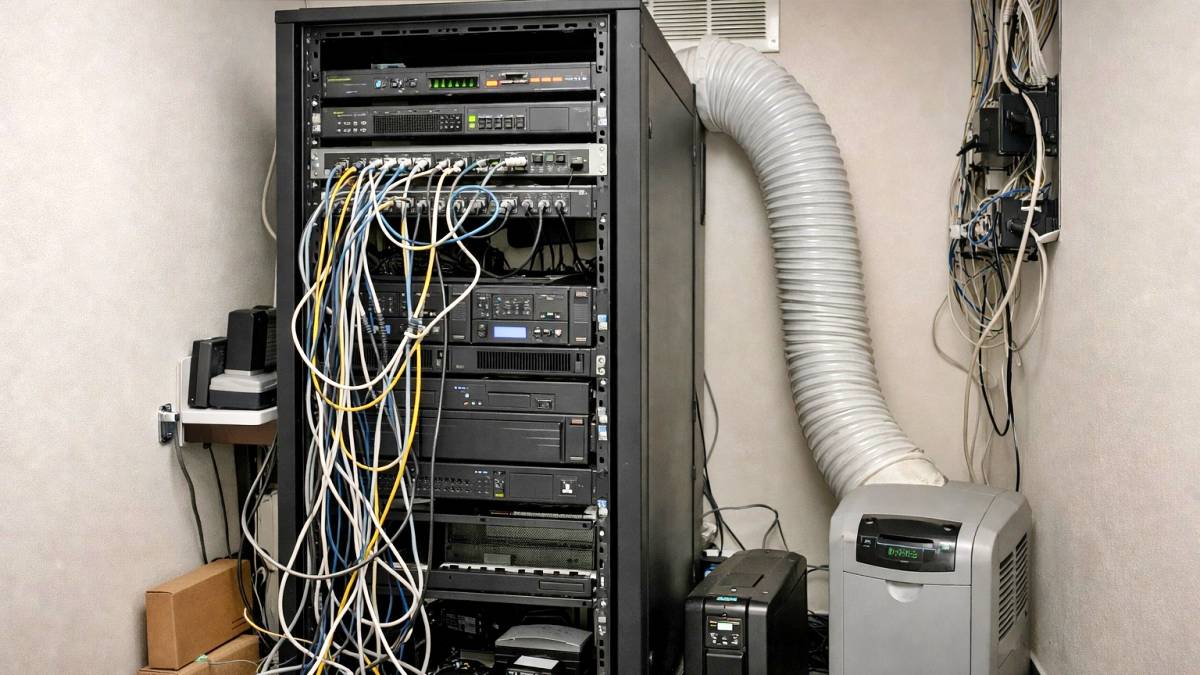
You’ve got a rack or some shelving, a retail-grade UPS (Uninterruptible Power Supply) that beeps whenever someone uses the microwave, and a portable AC unit with a hose snaked through the ceiling tiles. You’ve even got a sturdy deadbolt on the door. You call it your “server room.”
At Datacate, we call it a ticking time bomb.
We’ve seen enough “server closets” to know that businesses are simply trying to be efficient. But there is a massive difference between “storing computers in a room” and “operating a data center.” When your business relies on 24/7 uptime, the physics of an office closet simply don’t hold up.
Let’s get “scary real” about why your office isn’t a data center and why that DIY approach might be the biggest risk your company is currently taking.
The Cooling Fallacy: Airflow vs. Cold Air
One of the biggest misconceptions in IT is that if a room feels “cool,” the servers are safe. You might have a dedicated split-system AC unit humming away, but here’s the problem: office HVAC is designed to keep people comfortable, not silicon alive.
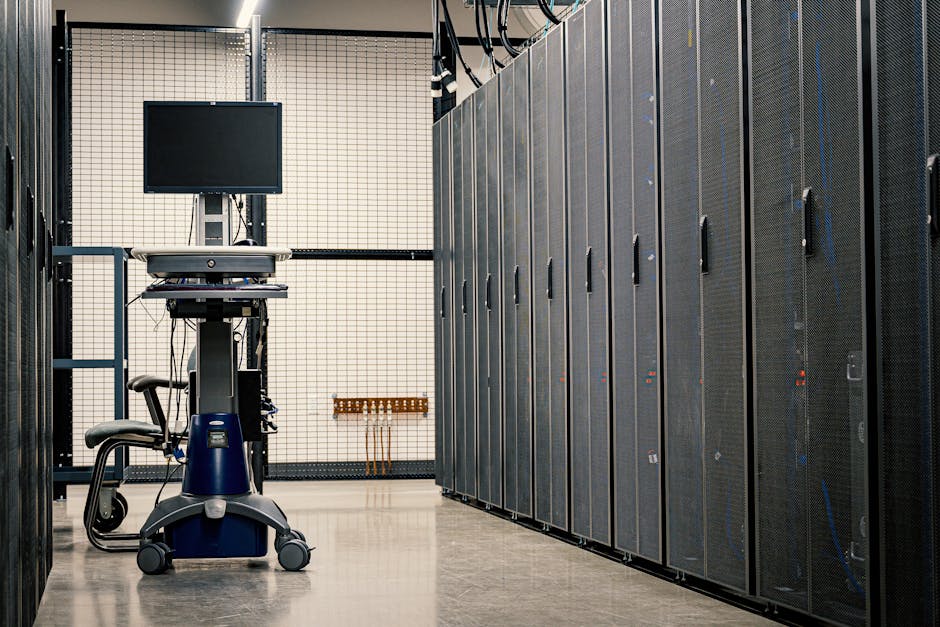
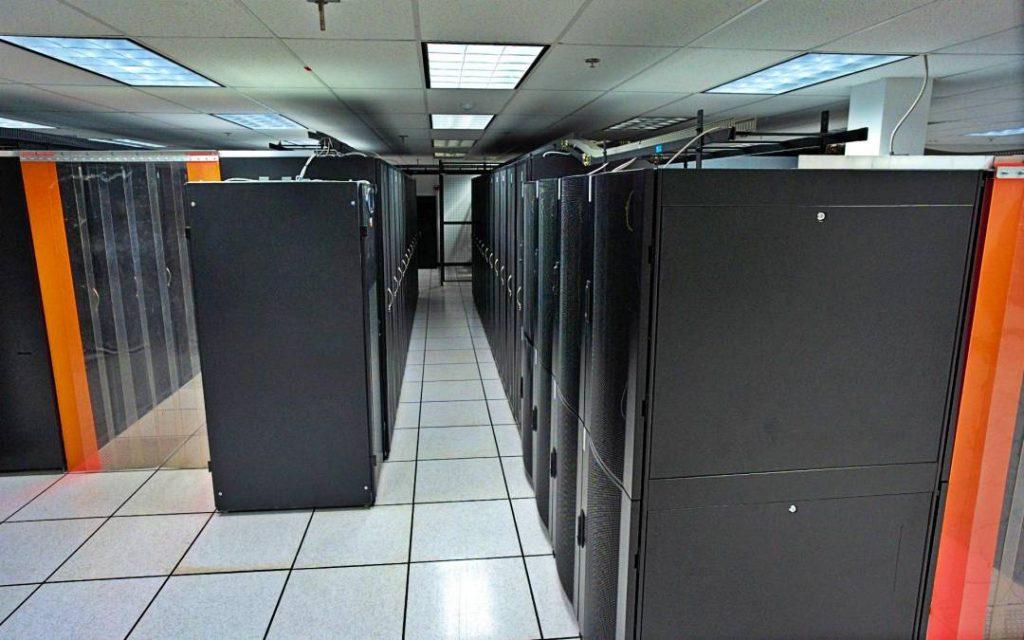
Servers generate an incredible amount of concentrated heat. In a professional facility like our Sacramento data center, we don’t just blow cold air into the room and hope for the best. We use precision environmental controls that manage CFM (Cubic Feet per Minute) and static pressure. We employ hot-aisle/cold-aisle containment to ensure that the cold air actually passes through the server chassis rather than just swirling around the room.
In an office closet, “dead spots” are common. Heat builds up behind the rack, creating a localized oven that bakes your motherboards. By the time your office thermostat realizes the room is too hot, your CPUs have already begun “thermal throttling”: slowing down your applications to prevent a total meltdown.
The “Power Strip” Problem
In your office, you are at the mercy of the local power grid and the building’s aging electrical infrastructure. Most office server closets rely on a small UPS for battery backup. These are great for a five-minute brownout, but what happens during a sustained outage?
When the power goes out at 2:00 AM on a Tuesday, does your office have a prime-source generator that kicks in within seconds? Does it have a fuel contract that guarantees delivery during a regional disaster?
At Datacate, redundancy isn’t a “nice-to-have”; it’s the foundation of our SLA. Our facility features N+1 redundancy. That means every critical system has a backup, and in some instances, those backups have backups. If a transformer blows down the street, our UPS systems bridge the gap instantly until our generators take the load. Your office closet, meanwhile, is just a collection of expensive bricks waiting for the lights to come back on.
Fire Suppression: Water is the Enemy
Here’s something that usually keeps CTOs up at night once they realize it. Most office buildings are equipped with traditional water-based fire sprinklers. If there is an electrical fire in your server rack, those sprinklers will do exactly what they were designed to: drench the entire room with water.
In an office closet, a small fire becomes a total equipment loss because of the “suppression” system.
Professional data centers use “Clean Agent” fire suppression. These systems use gases (such as FM-200 or Novec 1230) that chemically interrupt combustion. They extinguish fires without leaving a residue and, most importantly, without conducting electricity or damaging your hardware. We protect the uptime, not just the building.
The Human Factor and the 3 AM Crisis
Let’s say a drive fails or a circuit breaker trips at midnight. Who is there to fix it? In a DIY office setup, the answer is usually “nobody” until the first employee walks in at 8:00 AM and realizes the email server is down.
Datacate is an owned-and-operated facility with 24/7 monitoring. We don’t wait for you to call; our systems are constantly communicating with us. This allows us to maintain an industry-leading response time. While you’re sleeping, we’re likely already hot-swapping a component or rerouting traffic to keep your business from skipping a beat.
Furthermore, consider the “Janitor Variable.” We’ve heard horror stories of cleaning crews unplugging a server to plug in a vacuum or propping open a “secure” server room door because it was too hot inside. In a professional data center, access is strictly controlled, logged, and monitored by video 24/7.
Compliance: More Than Just a Locked Door
If your business handles sensitive data, a “locked door” doesn’t satisfy the auditors. Whether you are dealing with medical records under HIPAA or financial data requiring SOC 2 compliance, the physical security requirements are stringent.
Meeting these compliance requirements on-premises is prohibitively expensive for most small- to medium-sized businesses. You need biometric access, detailed audit logs, and documented environmental controls. When you colocate with Datacate, you are essentially “inheriting” our compliance posture. We’ve already done the hard work, passed the audits, and built the infrastructure so you can tell your clients their data is safe without breaking your budget.
The True Cost of “Saving Money”
The temptation of the server closet is the perceived $0 price tag. You already pay rent for the office, so the closet is “free,” right?
But when you factor in:
- Electricity costs: Office HVAC units are notoriously inefficient at cooling high-density loads.
- Hardware lifespan: Heat and dust in a closet can cut a server’s lifespan in half.
- Downtime: What is one hour of a total business outage worth to you? For most, it’s far more than a month of professional colocation pricing.
- Insurance premiums: Many providers are raising rates for companies that store critical data in non-rated environments.
Moving Beyond the Closet
If your business has outgrown its “closet” phase, it’s time to look at a professional solution. Whether you’re looking for IT support in Roseville or managed services in Rancho Cordova, the move to a professional facility is a rite of passage for a growing company.
It’s about moving from “hoping it works” to “knowing it works.”
At Datacate, we’ve spent years perfecting the art of infrastructure, so you don’t have to. You focus on your code, your clients, and your growth. Let us handle the physics, the power, and the cooling.
Ready to get your gear out of the closet and into a real home? Check out our facility or reach out to request a quote. Let’s make sure your “server room” is no longer the scariest room in your office.