The decision between colocation and a dedicated server is rarely about which option generates a lower bill any given month. It is about which model costs less over the life of your infrastructure, and that calculation is more nuanced than most buyers expect. The monthly invoice may be the most visible expense, but it is almost never the largest contributor to the total cost of ownership over the life of the infrastructure.
Both options put your workloads on physical hardware isolated from other tenants. The difference is who owns that hardware, who maintains it, and who absorbs the risk when something breaks at 2 a.m. According to MarketsandMarkets research, the global data center colocation market is projected to expand from $104.2 billion in 2025 to $204.4 billion by 2030 at a CAGR of 14.4%, meaning businesses at every scale are actively wrestling with this question right now. If you are, this guide cuts through the noise and gives you a framework for making the right call.
Key Takeaways
- Dedicated servers win on short time horizons: For the right workload, colocation can be significantly cheaper over a 3-5 year horizon than renting equivalent dedicated hardware indefinitely, but below that threshold, dedicated servers frequently cost less overall.
- Colocation’s break-even typically lands at 18-36 months: The break-even point between colocation and dedicated hosting typically falls between 18 and 36 months, so running owned hardware shorter than that rarely saves money.
- Scale shifts the math decisively: At one or two servers, dedicated hosting often costs less overall in the first few years. At 20 or more servers over a 3-5 year period, colocation typically wins on total cost of ownership. If you are at that scale threshold, act accordingly.
- Hidden costs are colocation’s biggest trap: They often come from bandwidth overages, cross-connect fees, equipment maintenance, and remote hands support. Power consumption beyond contracted limits can significantly increase monthly bills. Budget for these before signing any contract.
- Staffing requirements are a real cost factor: Dedicated servers reduce the physical operations workload. Your team can focus on the operating system, security, applications, backups, and monitoring while the provider handles the hardware platform. That labor cost difference belongs in your TCO model.
Quick-Start Prioritization Framework
| Strategy | Best For | Effort Level | Time to Results |
|---|---|---|---|
| Dedicated server (managed) | Small teams, 1-5 servers, short-term projects | Low | Days |
| Dedicated server (unmanaged) | Technical teams, predictable workloads, budget focus | Low-Med | Days |
| Colocation, single server or partial rack | Businesses with existing hardware, 2-3 year plans | Medium | Weeks |
| Colocation, full rack or cage | Mid-market and enterprise, 20+ servers, regulated industries | High | Weeks-Months |
| Hybrid (colo + dedicated) | Growth-stage businesses, mixed workloads | Medium-High | Weeks |
Start here if you are:
- A small business or startup: Choose a managed dedicated server. No upfront capital, no maintenance burden, and the provider handles hardware failures.
- A mid-market company with 10-20 servers: Run the 3-year TCO numbers for colocation. You may be close to the break-even point where owning hardware starts to generate savings.
- An enterprise with 20+ servers and stable workloads: Colocation likely wins on TCO. Focus your evaluation on facility quality, SLA terms, and proximity to your IT team.
- A regulated business (healthcare, finance, legal): Look for a colocation provider that holds the compliance certifications your industry requires before comparing price.
Understanding the Two Models
What Colocation Actually Is
Colocation means you own the physical server hardware outright and pay a data center operator for rack space, power, cooling, and network connectivity, rather than renting a dedicated server where the provider owns the hardware and you simply lease access to it.
You ship your server to the facility, the facility plugs it in, and from there you manage the machine remotely. The data center handles power redundancy, physical security, fire suppression, and cooling. Everything inside the server chassis- the operating system, applications, drivers, and firmware- remains your responsibility.
You are responsible for procuring the server hardware, installing your operating system and applications, and handling maintenance and upgrades either remotely or on-site.
What a Dedicated Server Actually Is
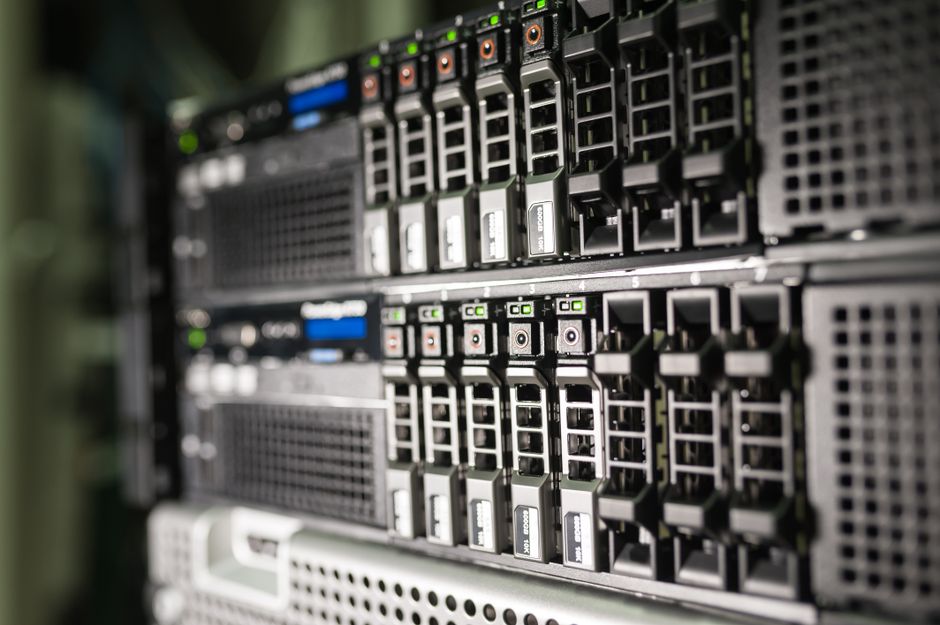
Dedicated bare metal servers provide physical isolation, predictable capacity, and fast deployment without requiring customers to purchase equipment. Dedicated server hosting requires little upfront spending and instead uses a recurring operating-expense model. You pay a flat monthly price for the capacity you reserve, while the provider owns, maintains, and replaces the physical equipment.
In plain terms: someone else bought the server, someone else is on call when a drive fails, and you get a fixed monthly bill that includes the hardware amortization baked into the price. That simplicity has a cost, reflected in the higher recurring fee.
Breaking Down the Real Costs
Colocation Pricing in 2026
Colocation pricing has two major tiers: standard compute and high-density AI workloads. They are priced very differently.
A standard full rack (42U, 3-5 kW) runs approximately $900-$2,500 per month all-in at a Tier 3 facility in the US, depending on market and term length. On top of that base fee, your total bill includes several additional line items that many buyers underestimate.
Beyond the base fee, buyers should budget for cross-connect fees (typically $100-$300/month per connection), power overages where applicable, remote hands support, and bandwidth costs. These add-ons are not edge cases; they are routine operating expenses.
According to CBRE, the average monthly asking rate for 250 kW to 500 kW requirements in primary North American markets rose to $196.25 per kW in H2 2025, a 6.6% year-over-year increase. If you need that scale of power, plan for ongoing price increases built into your multi-year TCO model.
Pro Tip: Before signing a colocation contract, request an itemized sample bill from an existing customer at similar power density. The base rack rate is the floor, not the ceiling. Remote hands fees, power overages, and cross-connect charges routinely add 20-40% to the base invoice.
Dedicated Server Pricing
Dedicated server prices range from $50/month for entry-level hardware to $2,000+/month for enterprise builds with high core counts, large RAM, and NVMe storage. Most production workloads land in the mid-range tier.
Managed dedicated hosting, which includes server monitoring, updates, and support, usually starts at $150 per month. Unmanaged dedicated hosting is cheaper, starting at $80, but requires technical expertise.
The dedicated server pricing model converts unpredictable hardware capital costs into a predictable monthly line item. Managed dedicated hosting converts an unpredictable CapEx line (hardware purchases, emergency replacements) into a flat, predictable OpEx monthly fee. For businesses running lean finance operations, that budget predictability matters.
The 5-Year TCO Comparison
The math that most buyers want to see is simple in concept but has important variables:
At a single-server scale, dedicated servers win over 5 years for most configurations. A 5-year simplified cost comparison at the entry tier shows colocation costing $16,000-$23,000 (including $4,500 hardware upfront, $150-$300/month in rack and bandwidth fees, and $500-$1,000/year in maintenance), while a comparable managed dedicated plan totals approximately $6,000, $10,000.
The picture changes significantly at scale. At 20 or more servers over a 3-5 year period, colocation typically wins on total cost of ownership. This is where the per-server math of owned hardware outperforms the recurring margins built into dedicated server pricing. If you are approaching that threshold, run both scenarios in a spreadsheet before deciding; the savings can be substantial.
The Hidden Costs Nobody Mentions
Remote Hands: The Invisible Labor Budget
When you colocate hardware, every physical task at the facility, such as swapping a failed drive, rebooting a hung server, or connecting a console cable, either requires your team to travel to the facility or a remote hands technician to do it for you. Remote hands rates commonly run $100 to $200 per hour, with some providers charging as much as $500 for complex or after-hours work, and time is usually billed in 15- or 30-minute minimums.
With a dedicated server, hardware-level intervention is the provider’s problem. Teams that choose dedicated servers are comfortable managing the operating system and applications but do not want to be responsible for failed drives at 2:00 a.m. If your staff time is worth anything, that is a legitimate cost to factor into your comparison.
Hardware Refresh: The Cost That Sneaks Up
Colocation TCO calculations frequently ignore the hardware refresh cycle. Servers depreciate and become performance bottlenecks. Hardware refresh costs for colocation are a major recurring CapEx every 3-7 years, while dedicated server customers pay zero because the provider upgrades hardware or provisions new nodes.
A $5,000 server purchase at year 4 is a real CapEx event. Factor it into your planning as a line item, not a footnote.
Pro Tip: When modeling colocation TCO, include a hardware refresh cost at year 3 or 4. Servers purchased in 2024 will start showing performance limitations by 2027. Assume $2,500-$5,000 per server for mid-range configurations, plus migration labor.
Colo Overages: The Bill That Surprises
Hidden costs in colocation often arise from bandwidth overages, cross-connect fees, equipment maintenance, and remote hands support. Power consumption beyond contracted limits can significantly increase monthly bills.
GPU servers in particular draw dramatically more power under load than spec sheets suggest. If you colocate high-density hardware, negotiate a contract with room to scale power allocation without penalty rates, or model overage costs explicitly.
Control, Compliance, and Customization
Where Colocation Genuinely Wins
If you are performance-sensitive, running large databases, heavy analytics, or GPU workloads, colocation gives you maximum freedom to design the exact hardware you need: specific NVMe models, RAID controllers, 25/40/100G NICs, or high-end GPUs. No dedicated server provider catalog can match that level of hardware specificity.
Custom enterprise hardware allows for specific optimizations, such as specialized cooling loops or unique storage arrays, that leased hardware cannot match. By using a carrier-neutral facility, organizations also eliminate vendor lock-in.
Financial institutions running low-latency trading platforms, healthcare organizations securing massive electronic health record (EHR) repositories, and large SaaS providers looking to stabilize base-load infrastructure expenses heavily use colocation.
Where Dedicated Servers Genuinely Win
Dedicated servers make capacity planning easier when your workloads change often. If your current server is undersized, you can migrate to a larger platform. If a project ends, you can reduce spend without being stuck with depreciating equipment.
Dedicated servers are ideal for organizations that require high performance without unnecessary complexity. Common uses include websites, SaaS platforms, e-commerce storefronts, and other content-heavy applications. Organizations that want easy deployment, predictable costs, and managed support may view dedicated servers as the most sensible choice.
Pro Tip: If your workload is stable and growing steadily, colocation is worth modeling. If you expect significant changes to your infrastructure needs within 18 months, new product launches, uncertain growth, or potential workload migrations, the flexibility of dedicated servers is worth more than the eventual savings of ownership.
Datacate for Colocation in Northern California
Best for Businesses That Want Colocation Without Enterprise-Scale Complexity
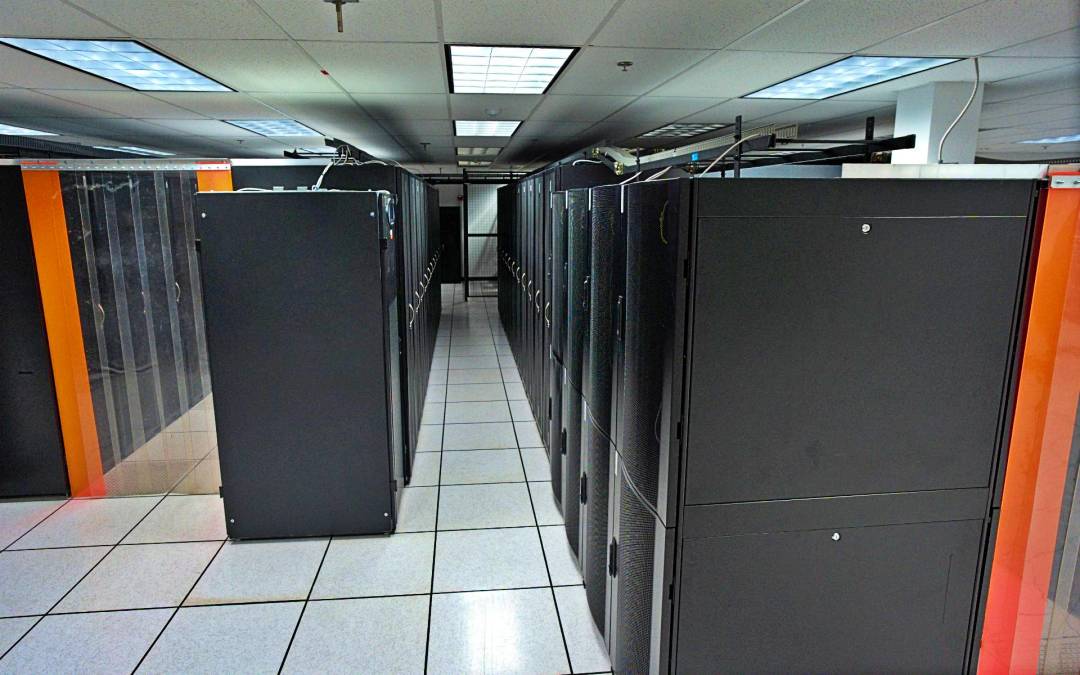
For businesses and organizations in the Sacramento and Northern California region, Datacate occupies a distinctive position in the colocation market. Datacate, Inc. operates a purpose-built colocation facility in Rancho Cordova, offering scalable options from single server racks to private cages. The facility holds HIPAA, SOC 2 Type II, SOC 3, and CSA STAR compliance certifications, making it a practical fit for businesses in regulated industries.
Datacate’s facility offerings include cages, private cabinets, partial cabinets, individual servers, remote hands, bare metal servers, and public cloud servers. That range of options means businesses can start with a single 1U slot and scale to a full cage without changing providers, an advantage that eliminates the disruption and renegotiation costs of migrating between facilities as you grow.
What sets Datacate apart for businesses evaluating the colocation vs. dedicated server decision is the ability to combine both models. You can run colocation for your stable core infrastructure while using Datacate’s dedicated bare metal servers for workloads that benefit from provider-managed hardware. In my experience, that hybrid approach often produces the best TCO outcome for mid-market businesses: hardware ownership where it makes economic sense, and managed servers where flexibility or compliance requirements make ownership impractical.
The facility features redundant power systems, emergency generators, fire suppression systems, and energy-saving technologies like Climate Wizard cooling and cold aisle containment. Those are not marketing claims; they are the operational foundation that determines whether your uptime SLA is credible.
Sacramento colocation data centers deliver compelling value through competitive pricing, abundant power capacity, and strategic positioning between Silicon Valley and the Pacific Northwest. While more focused than mega-markets, Sacramento’s colocation facilities offer enterprise-grade reliability with lower costs and less complexity. For businesses that do not need a Manhattan or San Jose price tag, that regional positioning is a genuine cost advantage built directly into TCO.
Pros:
- HIPAA, SOC 2 Type II, SOC 3, and CSA STAR certified
- Scalable from a single 1U slot to a private cage
- Offers both colocation and bare metal dedicated servers under one roof
- Competitive pricing relative to larger coastal markets
- Remote hands available on-site
Cons:
- Single primary facility location (Rancho Cordova, CA); businesses needing geographic redundancy across multiple regions will need a secondary provider
- May not suit ultra-high-density AI workloads requiring 30+ kW per rack
Frequently Asked Questions
Is colocation cheaper than a dedicated server?
For the right workload, colocation can be significantly cheaper over a 3-5 year horizon than renting equivalent dedicated hardware indefinitely. However, at small scale (one to five servers) and within the first 18 months, dedicated servers frequently cost less overall when you account for hardware purchase, maintenance, and remote hands in the colocation TCO. The correct answer depends entirely on your server count, time horizon, and staffing costs.
What is the break-even point between colocation and dedicated servers?
The break-even point between colocation and renting a dedicated server typically falls between 18 and 36 months, depending on hardware specifications and monthly colocation costs. More complex deployments with higher-spec hardware reach break-even faster because the hardware premium built into dedicated server pricing is larger at higher tiers. Run a side-by-side 36-month model using your actual hardware requirements before committing to either option.
What hidden costs should I budget for in colocation?
Businesses should watch for several hidden fees that can unexpectedly increase colocation costs. Common ones include power overage charges, bandwidth overage charges, remote hands fees, cross-connect fees, and one-time setup charges. Remote hands rates in particular can be significant: rates commonly run $100 to $200 per hour, with some providers charging as much as $500 for complex or after-hours work.
When does colocation make more sense than a dedicated server?
Think of large relational databases, analytics clusters, search engines, or internal platforms that run 24/7 at high CPU and IO utilization. Over 3-5 years, the cost per unit of compute and storage can be far lower when you own the hardware, especially with the right NVMe and RAM sizing. If your capacity planning is strong and growth is relatively steady, colocation turns infrastructure into a predictable, amortized cost. Regulated industries that require physical custody of hardware also have a strong case for colocation regardless of scale.
Can I combine colocation and dedicated servers from the same provider?
Yes, and I’ve found this hybrid approach works well for most mid-market businesses. You colocate your stable core infrastructure (databases, internal tools, compliance-sensitive systems) where hardware ownership provides long-term savings and control. You use provider-managed dedicated servers for workloads that change frequently or where you want the provider to absorb hardware risk. Providers like Datacate that offer both options under one roof make this hybrid model operationally simple.
The Bottom Line
Colocation vs. dedicated server is a financial modeling problem more than a technology problem. The right answer depends on your server count, time horizon, staffing costs, workload stability, and compliance requirements, not on which model sounds more sophisticated.
Dedicated servers win at small scale and short timelines. Colocation wins at meaningful scale and multi-year planning horizons. The break-even is real and measurable. Run the numbers for your specific situation.
If you are a Northern California business evaluating colocation as part of this decision, contact Datacate to discuss your infrastructure requirements, facility capabilities, and pricing for your specific footprint. The right colocation partner makes the TCO model work. The wrong one creates the hidden costs that erode any advantage ownership should have delivered.
Sources
- Colocation vs Renting a Dedicated Server: Cost and Control Comparison, WebsNP. 2026 guide covering break-even analysis and cost model comparison. https://www.websnp.com/help/dedicated-server-colocation-guide
- Data Center Colocation Market Report, MarketsandMarkets. Global market forecast from $104.2B to $204.4B by 2030. https://www.marketsandmarkets.com/Market-Reports/colocation-market-1252.html
- Colocation vs. Dedicated Server Hosting, InMotion Hosting. 5-year TCO comparison at entry and enterprise tiers. https://www.inmotionhosting.com/blog/colocation-vs-dedicated-server-hosting/
- TCO Analysis: 3-Year vs 5-Year Dedicated Server Ownership, InMotion Hosting. Full cost modeling including remote hands, admin time, and hardware refresh. https://www.inmotionhosting.com/blog/tco-analysis-dedicated-server-ownership/
- Colocation Pricing 2026: Rack, Cabinet, Cross-Connect, and the Hidden Costs, Offshore Server Hosting. Verified 2026 pricing tiers and hidden cost breakdown. Verified 2026 pricing tiers and hidden cost breakdown: https://inflect.com/blog/colocation-pricing-what-to-expect-for-racks-cabinets-and-cages-in-2026
- Data Center Colocation Pricing: 2026 Cost Per Rack & kW, Encor Advisors. CBRE-sourced per-kW pricing data for North American markets. https://encoradvisors.com/data-center-colocation-pricing/
- Colocation Pricing in 2026: Rack, Cabinet & Data Center Costs, Brightlio. CBRE vacancy and pricing trend data. https://brightlio.com/colocation-pricing/
- Dedicated Server Price in 2026: Full Cost Breakdown, Cherry Servers. Entry, mid, and enterprise pricing tiers by use case. https://www.cherryservers.com/blog/dedicated-server-price
- How to Evaluate Colocation vs Dedicated Servers for Long-Term Cost Efficiency, Prolime Host. TCO methodology and lifecycle analysis. https://www.prolimehost.com/blogs/how-to-evaluate-colocation-vs-dedicated-servers-for-long-term-cost-efficiency/
- Hidden Costs Associated with Colocation, DataBank. FAQ covering bandwidth overages, remote hands, and compliance costs. https://www.databank.com/faq/what-are-the-hidden-costs-associated-with-colocation/
- Colocation vs Dedicated Servers: A Complete Comparison Guide, Silvernox. CapEx vs OpEx comparison matrix. https://www.silvernox.com/blogs/colocation-vs-dedicated-server
- Colocation vs Dedicated Server: Key Differences and Best Choice, Cantech. Scale thresholds and break-even FAQ. https://www.cantech.in/blog/colocation-vs-dedicated-server/
- Colocation vs Rented Dedicated Servers vs Cloud, DCHost. Enterprise lifecycle cost analysis and workload profiling. https://www.dchost.com/blog/en/colocation-vs-rented-dedicated-servers-vs-cloud-choosing-the-right-infrastructure/
- Datacate SMF1 Sacramento Rancho Cordova Data Center, Datacenters.com. Facility specifications, certifications, and capabilities. https://www.datacenters.com/datacate-inc-smf1-sacramento-rancho-cordova
- What Is Colocation and Do You Need It?, Datacate. Pricing guidance for small business colocation in Sacramento. https://www.datacate.com/what-is-a-colo/
- Understanding Data Center Pricing Models, DataBank. Comprehensive guide to rack unit, per-kW, and add-on pricing. https://www.databank.com/resources/blogs/understanding-data-center-pricing-models-a-comprehensive-guide/
- Colocation vs Dedicated Servers: Which Fits?, Internetport. Staffing and operational burden comparison. https://internetport.com/en/blog/colocation-vs-dedicated-servers