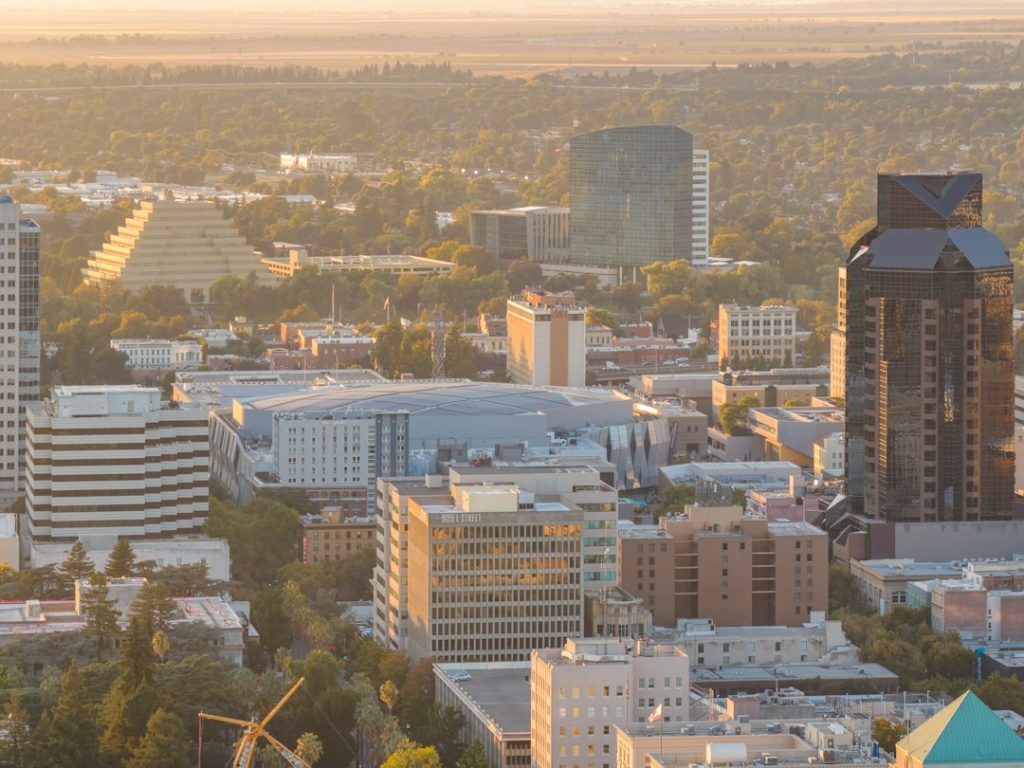
Rancho Cordova sits about 13 miles east of downtown Sacramento, and for years most people outside the technology industry would have struggled to place it on a map. That is changing fast. The data center industry is quietly converging on this Sacramento suburb for financial, physical, and strategic reasons, and the evidence is no longer circumstantial. According to Research and Markets’ Q2 2026 colocation report, the global colocation market is expected to grow 18.6% annually to reach $128.6 billion in 2026. Growth at that scale requires new markets, and Rancho Cordova is one of the clearest beneficiaries of that demand shift.
The case for Rancho Cordova is built on five converging factors: drastically lower power costs, measurably reduced seismic risk, deep fiber connectivity, active government investment in AI infrastructure, and a growing anchor tenant ecosystem. Understanding each one helps any business or IT decision-maker evaluate whether this market belongs in their infrastructure strategy.
Key Takeaways
- Power costs create structural savings: A 10 MW data center in Sacramento saves approximately $90 million over ten years compared to an equivalent PG&E-served facility in San Jose, according to Prime Data Centers’ analysis. If your current colocation contract is based in Silicon Valley, benchmark your power costs against SMUD rates immediately.
- Seismic risk is quantifiably lower: According to USGS data cited by Datacate, Sacramento faces less than a 0.78% probability of a 6.7-magnitude earthquake over the next 50 years, versus 56% for San Jose. For disaster recovery site selection, this number alone changes the calculus.
- Latency to the Bay Area is negligible: Datacate’s own latency research shows the data latency between Sacramento and the San Francisco Bay Area is under 3 milliseconds, well within the threshold for synchronous database replication for virtually every enterprise application.
- Public and private investment is accelerating: Solidigm has surpassed its initial $100 million investment commitment in Rancho Cordova R&D and headquarters, and the city signed a $5 million contract with NVIDIA to build out an AI and Robotics Ecosystem.
- Secondary markets are absorbing primary market overflow: Research and Markets projects that primary markets like Silicon Valley face near-historic low vacancy rates, pushing operators toward secondary markets with better grid access.
Quick-Start Prioritization Framework
| Strategy | Best For | Effort Level | Time to Results |
|---|---|---|---|
| Benchmark power costs vs. current provider | Any business with Bay Area colo | Low | Days |
| Evaluate Rancho Cordova for DR/failover site | SF Bay Area primary sites | Low | Weeks |
| Full primary site migration to Rancho Cordova | Cost-sensitive, compliance-heavy orgs | High | 3-6 months |
| Hybrid model, primary Bay Area, secondary RC | Enterprises needing low latency + cost savings | Medium | 1-3 months |
| Engage local providers for AI workload capacity | AI/ML teams needing GPU-dense environments | Medium | Weeks |
Start here if you’re:
- A Bay Area business with high monthly colocation bills: Benchmark your power costs first; the SMUD rate differential pays off quickly at any meaningful scale.
- An IT director building a disaster recovery plan: Rancho Cordova’s seismic profile makes it the natural DR choice for any organization with a primary site on or near a California fault zone.
- A growing startup or mid-market company: Scalable colocation options from Datacate to 365 Data Centers offer flexible footprints from single rack to dedicated suites without the premium pricing of Bay Area markets.
The Power Advantage That Silicon Valley Cannot Match
SMUD’s Rate Structure Gives Data Centers a Structural Edge
Power is the single largest operating expense in any data center’s budget, and according to BlueCap Economic Advisors, electricity can represent 15 to 25% of a facility’s ongoing costs. That percentage compounds over a ten-year contract. Choosing the wrong utility territory is an expensive mistake.
Rancho Cordova falls within the service territory of the Sacramento Municipal Utility District (SMUD), a community-owned, not-for-profit electric utility. SMUD’s own rate information confirms that its rates are among the lowest in California, averaging more than 50% lower than those of neighboring PG&E. For a data center operator, this single fact reshapes the entire total cost of ownership model.
Prime Data Centers’ analysis of SMUD’s ten-year cost forecast shows that over a ten-year period, a 10 MW data center in Sacramento will realize $90 million in savings over a PG&E-served counterpart in San Jose, and $32 million in savings over a Santa Clara-based facility served by Silicon Valley Power. At any scale of operation, those figures justify a thorough site evaluation. If your current data center budget is under pressure, translating these savings into your specific megawatt footprint is the first step.
Reliability Equals Uptime, and SMUD Delivers
Power cost matters little if the power is unreliable. As of March 31, 2025, SMUD reported 3,443 MW of total resources, and in its 2024 reliability report, SMUD said it met customer energy supply needs 100% of the time, with 98.7% of distribution circuits meeting reliability criteria. That is a utility’s published performance record, and for mission-critical infrastructure, it carries real weight.
Pro Tip: When evaluating any Rancho Cordova colocation provider, request the facility’s historical uptime record alongside your SLA. SMUD’s reliability track record sets a strong baseline, but your provider’s internal redundancy, UPS systems, generator coverage, redundant feeds, determines whether grid reliability translates to contractual uptime guarantees.
SMUD currently has more than 55% carbon-free electric generation and will have more than 75% carbon-free generation by 2030, making it one of the most renewably-sourced electric utilities in the United States. For organizations under ESG reporting pressure, locating infrastructure in a SMUD-served facility directly supports sustainability commitments without relying on renewable energy certificates alone.
Seismic Safety and Physical Resilience
The Numbers From USGS Tell a Clear Story
Physical resilience is the foundation of data center uptime. A facility can have every redundancy system in place and still face catastrophic risk if its location sits on an active fault zone. This is the calculation that many Bay Area operators choose not to scrutinize too closely.
According to the USGS, there is a probability of less than 0.78% of a 6.7-magnitude or higher earthquake in Sacramento over the next 50 years, whereas San Jose and San Francisco have a 56% and 32% chance, respectively, of a high-magnitude earthquake in this period. That is a 70-fold difference in seismic exposure between Rancho Cordova and San Jose. Any organization using Silicon Valley as its sole data center location carries that risk in its business continuity plan, whether it is acknowledged or not.
No known active faults or Alquist-Priolo earthquake hazard zones occur in Sacramento County, according to the City of Rancho Cordova’s own geological assessment. This is a regulatory distinction that affects insurance, construction standards, and the practical durability of physical infrastructure.
Disaster Recovery Positioning
Strategically positioned about 13 miles from downtown Sacramento and roughly 30 minutes from Sacramento International Airport, the site benefits from strong metro fiber infrastructure and reliable power from SMUD. Its location in a low-to-moderate seismic zone enhances resiliency, making it a dependable choice for disaster recovery, business continuity, and low-latency edge operations.
For any Bay Area company running a primary production site in or near San Jose or San Francisco, Rancho Cordova provides a geographically diverse secondary site that is close enough for synchronous replication but far enough to survive a regional seismic event. That is a combination that traditional DR strategies rarely achieve at this price point.
Connectivity That Competes With Any Major Market
Metro Fiber and Low-Latency Access to Bay Area Users
Connectivity is often cited as the primary reason operators hesitate about secondary markets. The assumption is that physical distance from the Bay Area means degraded performance. The data does not support this assumption for Rancho Cordova.
The data latency between Sacramento and the San Francisco Bay Area is less than 3 milliseconds, well within the threshold for virtually every enterprise application, including synchronous database replication. In practical terms, this means a business with users and customers concentrated in the Bay Area loses nothing measurable by locating its primary infrastructure 90 miles east.
Positioned within the Sacramento metropolitan area, Rancho Cordova data center facilities benefit from excellent connectivity infrastructure. They are in close proximity to major fiber optic networks and internet exchange points, facilitating high-speed data transfer and low-latency connections. This connectivity advantage makes Rancho Cordova data centers an ideal choice for businesses that require fast and reliable access to cloud services, content delivery networks, and real-time data processing capabilities.
Carrier Diversity and Open Access Infrastructure
Carrier diversity reduces the risk of a single-provider outage affecting connectivity. Rancho Cordova facilities offer carrier-neutral design with access to multiple national, regional, and local fiber providers including AT&T, Cogent, Comcast, Lumen, Verizon Business, Zayo, and others.
At the city level, Rancho Cordova has also invested in citywide open-access fiber. The Rancho Cordova FiberCity project is built as an open-access network, a model proven in other regions of the western United States and Europe, which allows fiber infrastructure to be shared by multiple service providers, delivering the fastest speeds at the most competitive prices. The infrastructure investment at the city level reinforces the connectivity available to commercial data center tenants.
Pro Tip: Request a latency test from any Rancho Cordova colocation provider to your specific application endpoints before signing a contract. Responsible providers will run this test and show you the results. Anything under 5 ms to Bay Area endpoints is entirely workable for most enterprise use cases, including latency-sensitive workloads.
The Anchor Tenant Effect and Government Infrastructure
The California State Data Center Anchors the Market
Government adoption is often an underappreciated indicator of a data center market’s maturity. Governments typically demand the highest reliability, security, and compliance standards, and their presence in a market drives the development of surrounding infrastructure.
The California Department of Technology (CDT) data centers serve as the Tier III equivalent facilities for state, county, federal, and local government entities throughout California. The state-owned Rancho Cordova data center is approximately 42,000 square feet and serves as the State’s primary production data center and a disaster recovery site for the Vacaville data center.
The city of Los Angeles migrated its data operations to the CDT’s data center in Rancho Cordova, Sacramento, as part of a $10.5 million contract, validating Rancho Cordova’s capacity to serve enterprise-scale government workloads. When LA moves its mainframe operations somewhere, the infrastructure question is largely answered.
Solidigm and the AI Ecosystem Signal Long-Term Commitment
Private sector anchor tenants are equally significant. Solidigm, a pioneer in enterprise data storage, announced it has exceeded its initial investment goals for its Greater Sacramento initiatives. The company committed $100 million into regional R&D facilities in September 2022, and approximately three-and-a-half years into the build-out, has surpassed this figure and will continue to invest in local talent and technology to fuel global AI advancements.
The Human Machine Collaboration Institute and Rapt.AI announced the deployment of NVIDIA GB10 systems to anchor the AI and Robotics Ecosystem, a first-of-its-kind municipal AI innovation environment designed to make advanced computing accessible, affordable, and inclusive. The initiative is led through strategic collaboration between NVIDIA, HMCI, Rapt.AI, and the City of Rancho Cordova, and is backed by a $5 million investment from the city. This public-private partnership creates a talent pipeline and AI infrastructure concentration that attracts further technology investment, a self-reinforcing cycle that secondary markets rarely achieve this early in their development.
Pro Tip: When evaluating a secondary data center market, track the anchor tenant trajectory rather than the current facility count. Rancho Cordova’s combination of a state government primary data center, a $100M+ semiconductor R&D headquarters, and a city-funded NVIDIA AI ecosystem represents an anchor quality that few secondary markets can match.
Emerging Demand and the Regional Market Opportunity
Sacramento-Area Development Is Accelerating
The broader Sacramento region is attracting development investment that reflects the overflow from constrained primary markets. Prime Data Centers broke ground on SMF02, the second data center on its Sacramento campus. The 150,000-square-foot facility will deliver 18 MW of critical IT load capacity, marking a significant expansion of Prime’s regional presence and continued investment in California as demand for AI-ready digital infrastructure accelerates across the state.
Prime Data Centers noted that having been present in the region for over 10 years, they have seen Sacramento emerge as a key destination for data center development, offering access to reliable power, a favorable operating environment, and proximity to the Bay Area technology corridor. When a hyperscale-capable developer breaks ground on a second facility, it signals not a speculative bet but a response to confirmed demand.
Silicon Valley’s Constraints Are Rancho Cordova’s Opening
The conditions pushing operators away from Silicon Valley are structural, not cyclical. According to the Turner and Townsend 2025 Data Center Cost Index, Silicon Valley is one of the most expensive data center construction markets globally at $13.3 per watt to build, driven by land availability constraints and workforce dynamics. For context, the shift toward secondary and regional markets reflects one constraint above all others: available power capacity. Northern Virginia and Silicon Valley have both hit meaningful grid saturation.
Primary markets in the US, UK, Germany, and Singapore are experiencing near-historic low vacancy rates. Secondary and emerging markets are absorbing development activity redirected by primary market constraints. Rancho Cordova is positioned to be one of the primary beneficiaries of that redirection on the West Coast.

Common Mistakes When Evaluating Secondary Data Center Markets
Treating Latency as a Dealbreaker Without Testing It
In our experience, the most common objection to secondary market data centers is latency, and it is almost always raised without actual measurement. Teams assume physical distance means degraded performance without requesting a live latency test. For Rancho Cordova, the sub-3ms round-trip to Bay Area endpoints makes this objection empirically weak for the vast majority of enterprise applications. Test before you assume.
Ignoring Total Cost of Ownership in Favor of Headline Rate
We’ve found that organizations often compare colocation contracts on a per-rack or per-U basis without modeling the full power cost differential over the contract term. A lower headline rate in a PG&E territory can carry far higher total costs than a slightly higher rack rate in SMUD territory. Model the ten-year power cost, not the monthly invoice line.
Underweighting Physical Risk in Site Selection
Disaster recovery exercises are planned, but site selection risk is structural and rarely revisited. Organizations that placed their primary production site in a high seismic zone before DR requirements became board-level concerns are now inheriting that risk through infrastructure debt. Rancho Cordova’s seismic profile makes a strong case for relocation or secondary site development, not as a future initiative, but as a current risk management action.
Frequently Asked Questions
What makes Rancho Cordova different from other Sacramento-area data center locations?
Rancho Cordova combines the power cost advantages of SMUD service territory with a specific concentration of anchor tenants, including the California State Data Center and Solidigm’s global headquarters, that creates an ecosystem effect not found in every Sacramento suburb. The city has also made direct investments in technology infrastructure, including its NVIDIA AI partnership, signaling long-term policy support for the sector.
How does SMUD pricing compare to PG&E and Silicon Valley Power for data center operators?
Prime Data Centers’ published analysis shows that a 10 MW data center in Sacramento saves approximately $90 million over ten years compared to a PG&E-served facility in San Jose, and $32 million compared to a Silicon Valley Power-served facility in Santa Clara. SMUD is the third most affordable power utility in California as measured by system average rates, and SMUD’s own rate disclosures confirm its rates average more than 50% lower than PG&E’s.
Can a company in the Bay Area actually use Rancho Cordova as a primary data center site?
Yes. Datacate’s latency research confirms that round-trip data latency between Sacramento and the Bay Area is under 3 milliseconds, which is within tolerance for synchronous database replication and virtually every enterprise application. Many Bay Area companies already use Rancho Cordova as a primary or co-primary site, with the cost savings providing budget for application-level redundancy.
What compliance certifications are available at Rancho Cordova data centers?
Facilities in Rancho Cordova typically hold certifications including SOC 2 Type II, HIPAA, PCI DSS, SSAE 18, and ISAE-3402, supporting healthcare, financial services, and government workloads. Datacate’s facility maintains HIPAA, SOC 2 Type II, SOC 3, and CSA STAR certifications, covering a broad range of regulated industry requirements.
Is Rancho Cordova suitable for AI and high-performance computing workloads?
The market is actively developing AI-ready capacity. Prime Data Centers’ SMF02 facility is specifically designed to support hyperscale and high-density AI deployments, and the city’s NVIDIA AI and Robotics Ecosystem provides both infrastructure and a talent development pipeline. Solidigm’s local AI storage R&D campus further anchors the region as an AI infrastructure concentration point.
The Bottom Line for Your Infrastructure Strategy
Rancho Cordova’s rise as a data center hub is the direct result of five overlapping advantages that no single competitor offers in combination: SMUD’s low-cost, highly reliable, increasingly renewable power; a seismic risk profile that is negligible compared to the Bay Area; sub-3ms latency to one of the world’s largest technology markets; deep fiber infrastructure with carrier diversity; and a government-backed AI ecosystem attracting anchor tenants with long-term commitments.
The global colocation market is expected to surpass $128 billion in 2026, and the operators who position their infrastructure in cost-efficient, resilient, well-connected markets today will compound those advantages for years. For organizations evaluating their next colocation contract or disaster recovery site, Rancho Cordova deserves a formal evaluation, not a footnote.
If you’re looking for a provider with deep roots in the Rancho Cordova market, Datacate operates a purpose-built facility at 2999 Gold Canal Drive, purpose-designed for high-performance, compliant colocation with multiple fiber entry points and direct connectivity to Tier 1 carriers and Internet exchanges.
Sources
- Rancho Cordova Datacenter Beats Silicon Valley, Datacate, Inc. Analysis of power costs, latency, and seismic risk. https://www.datacate.net/rancho-cordova-datacenter/
- Datacate Facility, Rancho Cordova, CA, Datacate, Inc. Facility specifications and certifications. https://www.datacate.net/gcdc-facility/
- Data Center Colocation Market Global Forecast 2026-2032, Research and Markets / GlobeNewswire. Market size and CAGR projections. https://www.researchandmarkets.com/reports/6233864/global-data-center-colocation-market-size
- Data Center Reliability: Your Power Utility Partner, Prime Data Centers. SMUD vs. PG&E vs. Silicon Valley Power cost comparison. https://primedatacenters.com/news/data-center-reliability-power-utility-partner/
- Why Sacramento Is a Great Data Center Location, Prime Data Centers. Seismic and sustainability analysis. https://primedatacenters.com/news/why-sacramento-is-the-best-data-center-site-in-california/
- Prime Data Centers Breaks Ground on Second Sacramento Data Center, Business Wire / Prime Data Centers. SMF02 development announcement. https://primedatacenters.com/news/prime-data-centers-breaks-ground-on-second-sacramento-data-center-expanding-regional-campus-footprint/
- SMUD Rate Information, Sacramento Municipal Utility District. Official rate disclosures. https://www.smud.org/Rate-Information
- Solidigm Expands Sacramento Development, Fueling Global AI Leadership, Solidigm Newsroom. Investment milestone and expansion details. https://news.solidigm.com/en-WW/263946-solidigm-expands-sacramento-development-fueling-global-ai-leadership/
- HMCI and Rapt.AI Deploy NVIDIA GB10 Systems for Rancho Cordova AI Ecosystem, AIthority / PRNewswire. City AI initiative details. https://aithority.com/machine-learning/hmci-and-rapt-ai-announce-deployment-of-nvidia-gb10-systems-to-power-the-rancho-cordova-ai-robotics-ecosystem/
- California Department of Technology Data Center Services, CDT / Baxtel. State data center specifications and government customers. https://baxtel.com/data-centers/california-department-of-technology-cdt
- 365 Data Centers Rancho Cordova, datacenters.com. Facility specs and carrier access. https://www.datacenters.com/365-ca1-rancho-cordova
- Data Centre Construction Cost Index 2025, Turner and Townsend. Silicon Valley construction cost per watt data. https://reports.turnerandtownsend.com/data-centre-construction-cost-index-2025/data-centre-cost-trends
- Data Center Construction Cost Statistics 2026, Axis Intelligence. Primary market grid saturation data. https://axis-intelligence.com/data-center-construction-cost-statistics/
- Rancho Cordova FiberCity Project, City of Rancho Cordova. Open-access fiber network announcement. The Rancho Cordova FiberCity
- Cost of a Data Center, BlueCap Economic Advisors. Electricity as percentage of data center operating costs. https://www.bluecapeconomicadvisors.com/post/cost-of-a-data-center
- Global Data Center Colocation Market Forecast, Research and Markets Q2 2026. Primary market vacancy rates and secondary market absorption. https://finance.yahoo.com/sectors/technology/articles/global-data-center-colocation-market-100500157.html
- City of Rancho Cordova Geology and Soils Assessment, City of Rancho Cordova. Alquist-Priolo fault zone status for Sacramento County. Rancho Cordova is located in a low to moderate seismic zone for California. For more information on earthquake fault zones in California, visit the California Geological Survey’s Alquist-Priolo Earthquake Fault Zones page at https://www.conservation.ca.gov/cgs/alquist-priolo