A data breach costs U.S. organizations an average of $10.22 million per incident, according to IBM’s Cost of a Data Breach Report 2025, the highest average of any region in the world. When your servers are housed in a colocation facility, the security controls of that facility become a direct part of your risk profile. A colocation provider security audit is the process that reveals whether those controls can actually hold up. If you have never been through one, knowing what to expect makes the difference between a smooth process and a scramble.
This guide walks through every stage of a colocation provider security audit, what auditors examine, what certifications matter, where responsibility lines are drawn, and how to avoid the most common mistakes businesses make going in unprepared.

Key Takeaways
- Physical security is the starting line: Colocation providers use multi-layered physical security protocols to safeguard their facilities, including perimeter fencing, 24/7 surveillance cameras, motion detectors, and on-site security personnel. Auditors verify every layer.
- Certifications are proof, not decoration: ISO 27001, SOC 2 Type II, and HIPAA are not just badges displayed on a website; they are proof that the provider has undergone an independent audit and met strict security standards. Always ask for the actual reports.
- You share the responsibility: Most providers now follow a shared responsibility model. The facility is their job. Your team still manages device-level controls, segmentation, firmware updates, and activity monitoring.
- Audit frequency matters: Most data center standards, such as SOC 2 and ISO 27001, require annual external audits and ongoing monitoring. Regular checks ensure data center operations stay secure and catch any compliance gaps before they become problems.
- State regulations are multiplying fast: More than 200 bills aimed at regulating data centers were introduced across U.S. states in 2025, and more than 40 were enacted into law. Verify your provider tracks jurisdiction-specific requirements.
Quick-Start Prioritization Framework
| Audit Focus Area | Best For | Effort Level | Time to Results |
|---|---|---|---|
| Physical security walk-through | All businesses | Low | Immediate |
| SOC 2 Type II report review | General compliance | Low | Days |
| ISO 27001 certification check | International or regulated orgs | Low | Days |
| Incident response plan review | All businesses | Medium | 1-2 weeks |
| Penetration test results review | High-risk workloads | High | Weeks |
| HIPAA/PCI DSS specific audit | Healthcare and finance | High | Weeks to months |
Start here if you’re:
- A small or mid-size business: Request and review the provider’s current SOC 2 Type II report first. It covers the widest range of security controls with the least time investment on your side.
- A healthcare or financial organization: Prioritize HIPAA attestation and PCI DSS validation before any other evaluation step. These are non-negotiable requirements that define whether a provider can legally host your data.
- A regulated enterprise or government contractor: Add ISO 27001 and NIST 800-53 to your review list, and confirm whether the provider supports FedRAMP or FISMA compliance efforts.
What a Colocation Security Audit Actually Covers
Many businesses assume a colocation security audit is a quick paperwork review. In practice, periodic security assessments or audits of physical IT hardware, peripheral and security equipment, and supporting gear such as power and cooling are required to ensure the safety, effectiveness, and efficiency of a data center. The scope is broader than most people expect.
Physical Security Controls
Modern facilities use continuous staffing, multi-factor access controls, biometrics, multi-zone security layers, and comprehensive camera monitoring. During a physical security audit, each of these layers gets tested individually. Auditors look for whether controls function in practice, not just whether they appear on a policy document.
Entry is controlled through robust access controls, such as key cards, biometric scanners, and mantraps, to ensure that only authorized personnel can access sensitive areas. A common audit finding is that a facility has the hardware in place but lacks the documented procedures for managing, revoking, or auditing access credentials on a regular schedule. Confirm your provider can show timestamped access logs on demand.
Network and Cybersecurity Controls
Network and cybersecurity protocols play a critical role in ensuring data center security. Colocation providers deploy a range of advanced cybersecurity measures to protect against cyber threats and data breaches. They use firewalls and intrusion detection systems to monitor and block unauthorized access attempts.
Network segmentation is one of the most effective strategies for minimizing damage during an attack. Dividing infrastructure into isolated segments prevents attackers from moving freely across the network; even if they breach one barrier, they encounter another. During an audit, expect auditors to ask for specific evidence of how tenant traffic is isolated, not just a general claim that segmentation exists.
Environmental and Operational Controls
A data center audit checklist covers physical security, including access control, perimeter security, CCTV, and fire suppression systems, as well as environmental controls such as temperature, humidity, airflow, power redundancy, and backup generators. These systems may seem secondary to security, but an environmental failure can expose or destroy data just as effectively as a cyberattack. The Uptime Institute’s Annual Outage Analysis consistently finds power as the most common cause of impactful data center outages.
Pro Tip: Before the audit, ask your provider for their last environmental monitoring report and their tested recovery time from a generator switchover. A provider that has never run a live failover test is a provider that does not know what will actually happen during an outage.
The Certifications That Carry Real Weight
Certifications are the most efficient way to benchmark a colocation provider’s security posture without running a full independent audit from scratch. Modern enterprises demand proof of security, resilience, and sustainability from their infrastructure partners. Certifications offer third-party validation that a facility meets industry best practices and compliance benchmarks.
SOC 2 Type II
A SOC 2 Type 2 report is more valuable than Type 1 because it attests that controls were operating effectively over a period of time, not just that they existed at a point in time. When evaluating a provider, always ask specifically for Type II. A Type I report tells you the controls were designed correctly on a single day. A Type II report shows they actually worked month after month. SOC 2 reports are a vital form of attestation for data centers to provide to their clients. They provide documentation that the particular facility has the correct security controls and documentation that these security controls work.
ISO 27001
ISO 27001 is the most widely accepted standard for managing information security, making it the foundation of 2025 data center compliance. This security compliance standard provides a method for detecting risks to sensitive data early and ensuring ultimate protection for data center facilities. Unlike SOC 2, which is primarily recognized in North America, ISO 27001 holds weight internationally, an important consideration if your business serves customers outside the U.S. or is subject to GDPR.
HIPAA and PCI DSS
If you handle health data (HIPAA), card data (PCI-DSS), or sensitive customer information, a weak security posture can lead to serious violations. These are statutory requirements, meaning they are enforced by law rather than by industry preference. A SOC 2 Type 2 report has requirements that translate into specific physical security controls: badge readers and access logging, CCTV monitoring with 90-day retention, restrictions on who can access customer equipment, and documented procedures for managing access lists.
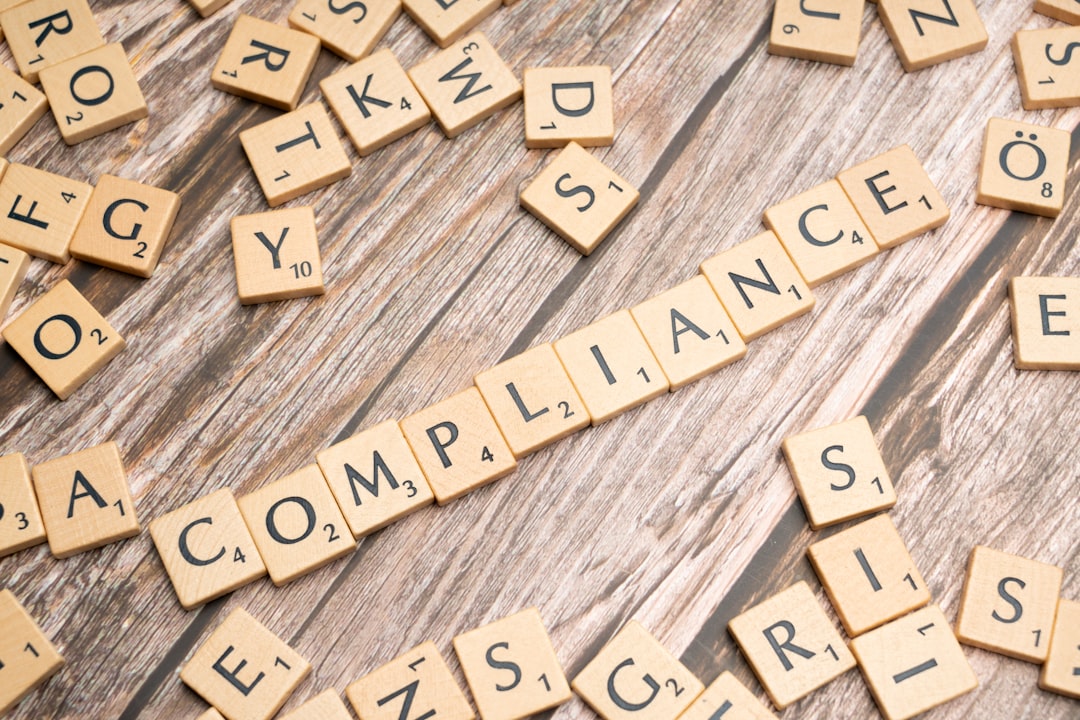
For businesses in regulated industries, a provider like Datacate, which holds SOC 2 Type II and HIPAA compliance at its Rancho Cordova facility, offers a concrete example of what a fully documented compliance posture looks like in a colocation environment.
Pro Tip: Do not accept certification logos on a website as due diligence. When selecting a provider for data center colocation, request up-to-date audit reports, not just certification logos. Truly secure colocation means the provider regularly, typically annually, undergoes third-party assessments and documents the results with valid certifications.
Understanding the Shared Responsibility Model
One of the most common sources of confusion in a colocation security audit is the boundary between what the provider is responsible for and what falls on you. Modern facilities use a continuous environment that depends on two layers. The provider is responsible for the physical protection of the facility, and you manage the logical controls applied to your systems.
Think of it like renting office space in a secure building. The building owner handles the locks on the main entrance, the cameras in the lobby, and the fire suppression system. You are still responsible for locking your own cabinets and controlling who has access to your files. In colocation, the split works the same way.
What the Provider Owns
- Physical facility access and perimeter security
- Power and cooling redundancy
- Network infrastructure and backbone connectivity
- Environmental monitoring and fire suppression
- Compliance certifications for the facility itself
What You Own
Colocation clients should implement robust cybersecurity frameworks to protect their hosted assets. Best practices include using firewalls, intrusion detection systems, and encryption for data in transit and at rest. Clients should also maintain updated patch management, strong password policies, and network segmentation to prevent lateral attacks.
Because colocation is a shared-responsibility model, you must harden your systems and processes while the facility supplies resilient, secure infrastructure. Document how responsibilities are split to avoid gaps. Auditors will ask for that documentation. If it does not exist, you have a finding before the audit even formally begins.
Pro Tip: Ask your provider for their written shared responsibility matrix before signing any agreement. A quality provider will have a documented breakdown of exactly which controls they own versus which are your obligation. If they cannot produce one, treat that as a red flag.
What Auditors Actually Look For in Practice
In my experience, the businesses that struggle most during colocation security audits are those that have never viewed the audit scope from the auditor’s perspective. The primary purpose of data center audits is to evaluate the adequacy, effectiveness, and efficiency of the controls in place to minimize risks such as unauthorized access to the data center, business interruptions, theft of information assets, and environmental hazards.
Incident Response Documentation
An incident response plan must define escalation procedures, 24/7 contact points, and timeframes for each step. Auditors will ask specifically: who do you call at 2 a.m. when something goes wrong? What data does the provider share with you during a security event? How quickly are you notified? Providers without a clearly defined, written incident response plan will not satisfy this line of questioning.
Incident management documentation should cover the incident management process, procedures, roles, and involved staff, including responses and remediation efforts during an incident. If your provider cannot hand you a current, version-controlled incident response plan, escalate that gap before an actual incident forces the question.
Access Log Reviews and Personnel Vetting
Intrusion detection systems and SIEM solutions analyze data from various sources to detect threats. Regular audits and reviews of access logs ensure compliance with security policies and identify anomalies. Auditors will request actual logs, not just confirmation that logging exists. They will look for unexplained access events, gaps in the log timeline, and evidence of regular access reviews by the provider’s internal security team.
Security protocols should be documented and enforced. Who can authorize visitors? What identification is required? How are visitors escorted and logged? These details matter when auditors ask how you prevent unauthorized access to systems processing sensitive data.
Disaster Recovery Testing Evidence
I’ve found that this area produces more audit findings than almost any other. Providers should require regular disaster recovery tests; plans that have never been tested in practice usually fail when you need them most. Auditors look for test records with documented outcomes, not just the existence of a DR plan. Ask your provider to share the results of their most recent failover test, including any failures identified and the remediation steps taken.
Common Mistakes to Avoid Before and During the Audit
Assuming the Provider Handles Everything
Gaps often appear when teams assume the provider handles everything. This is the single most damaging assumption you can bring into a colocation security audit. Your organization is responsible for everything above the physical infrastructure layer. If your operating systems are unpatched, your encryption keys are unmanaged, or your access credentials are not regularly reviewed, those findings are your responsibility, not the provider’s.
Relying on Certifications Without Reading the Reports
Certifications don’t replace due diligence, but they give you a solid starting point. A trustworthy provider should meet standards like SOC 2 Type II for operational controls and ISO 27001 for information security. The key phrase is “solid starting point.” A certification tells you the controls existed and functioned during the audit period. Reading the actual report tells you whether any exceptions were noted, how significant they were, and how the provider remediated them. Always read the full report.
Skipping the On-Site Walk-Through
According to the Uptime Institute, 70% of incidents in data centers are caused by human factors, with unauthorized physical access accounting for a significant portion of these cases. Therefore, verify physical controls in person, not just on paper. An on-site walk-through before committing to a provider reveals how security policies translate into daily practice, whether tailgating actually gets challenged, whether visitor logs are maintained consistently, and whether the physical environment matches the documentation.
Frequently Asked Questions
How often should a colocation provider’s security audit be conducted?
Most data center standards, such as SOC 2 or ISO 27001, require annual external audits and ongoing monitoring. However, your internal review of the provider’s controls should happen more frequently. A good practice is to request updated compliance documentation annually and schedule an on-site review whenever there are significant changes to your infrastructure or the provider’s facility.
What documents should I request from a colocation provider before an audit?
At minimum, request the provider’s most recent SOC 2 Type II report, ISO 27001 certificate with current scope, incident response plan, access log retention policy, and disaster recovery test results. Your colocation provider should be able to provide documentation that supports your risk assessment, including security certifications, audit reports, and detailed control descriptions. If any of these documents are unavailable or outdated, treat them as a material finding.
What is the difference between a SOC 2 Type I and Type II report?
SOC 2 attestations have a couple of different types. Type 1 is the evaluation of the company’s system and security controls. It assesses the various processes and procedures outlined in the AICPA Trust Services Criteria. Type II builds on this by covering how effectively those controls functioned over an observation period, typically six to twelve months. For any serious compliance evaluation, Type II is the standard you should require.
Are colocation providers responsible for my data compliance, such as HIPAA?
If your data handling must be PCI-compliant, that’s your responsibility, but they can make compliance easier or harder. The same principle applies to HIPAA. The provider is responsible for physical safeguards and the facility’s compliance posture. Your organization remains responsible for technical and administrative safeguards applied to your own systems. Achieving colocation HIPAA compliance depends on a clear Business Associate Agreement, layered physical security, strong encryption and access controls, and resilient disaster recovery.
What happens if my colocation provider fails an audit finding?
Regular security audits help identify vulnerabilities in physical and network infrastructure, allowing colocation vendors the opportunity to address and mitigate potential security risks and threats. When a provider receives a finding, they are expected to document a remediation plan with timelines. Request that plan in writing. If the finding is severe, such as a failure in access controls or logging, consider whether your workloads should remain in that facility until remediation is confirmed.
The Bottom Line
A colocation provider security audit is one of the most important exercises your organization can run. The physical facility housing your servers is part of your security posture, compliance documentation, and risk profile. In the modern colocation world, one of the most compelling reasons to conduct regular security audits is to build and maintain trust. Although clients manage their own equipment, they are still heavily dependent on the colocation provider’s security measures. It’s therefore important that they feel they can rely on them, particularly when handling regulated data.
Know the shared responsibility boundary before the audit begins. Request actual reports rather than certificate logos. Verify that the provider’s controls function in practice, not just on paper. And partner with a provider that treats compliance as an operational discipline rather than a marketing checklist.
If you are evaluating colocation options in the Sacramento region, Datacate’s Rancho Cordova facility maintains SOC 2 Type II, HIPAA, SOC 3, and CSA STAR compliance, with 24/7 on-site security personnel, biometric access controls, mantraps, and continuous video surveillance- the documented, audited controls that a security audit process is designed to verify.
Sources
- IBM Cost of a Data Breach Report 2025, IBM Security. Average breach cost data and U.S. regional breach costs. https://www.ibm.com/reports/data-breach
- Colocation Security Audits: Ensuring Compliance, DataBank. Overview of why regular colocation security audits matter. https://www.databank.com/resources/blogs/colocation-security-audits-ensuring-compliance/
- 10 Colocation Security Best Practices, Meter. Shared responsibility model and certification requirements. https://www.meter.com/resources/colocation-security
- Secure Colocation, The One Criterion You Cannot Afford to Underestimate, FindArticles. Physical security statistics and certification guidance. https://www.findarticles.com/secure-colocation-the-one-criterion-you-cannot-afford-to-underestimate/
- Best Practices of Colocation Data Center Security, DataBank. Multi-layered physical security protocols and access control details. https://www.databank.com/resources/blogs/colocation-data-center-security/
- Data Center Colocation and Security: Key Factors, Flexential. Shared responsibility model and certification frameworks. Modern facilities use continuous
- Colocation for Financial Services: Compliance, Security, and Infrastructure, Netrality. SOC 1, SOC 2, PCI DSS, and visitor management requirements. A SOC 2 Type 2 report is more
- Data Center Certifications: HIPAA, PCI DSS, SSAE 16, SOC, Colocation America. Certification types and compliance standards explained. https://www.colocationamerica.com/data-center-certifications
- Data Center Audit Checklist, PCI DSS Guide. Scope of data center audit controls and checklist categories. https://pcidssguide.com/data-center-audit-checklist/
- Top Data Center Compliance Standards for Colocation, ServerMania Blog. ISO 27001, SOC 2, HIPAA, and PCI DSS compliance overview. https://blog.servermania.com/colocation-data-center-compliance
- Data Center Security Compliance Checklist, TechTarget. State-level data center regulations and compliance audit procedures. https://www.techtarget.com/searchdatacenter/tip/Data-center-security-compliance-checklist
- Colocation HIPAA Compliance: Requirements, BAAs, and Provider Checklist, AccountableHQ. Shared responsibility model in HIPAA context and BAA requirements. https://www.accountablehq.com/post/colocation-hipaa-compliance-requirements-baas-and-provider-checklist
- Protecting Your Data: Top Strategies Used by Colocation Providers, Data Canopy. Network monitoring, IDS, SIEM, and access control detail. Network and cybersecurity
- Healthcare Data Center Infrastructure: HIPAA Compliance and PHI Security, Netrality. HIPAA physical and technical safeguards for colocation. Healthcare data centers and HIPAA compliance for colocation
- Why Data Center Physical Security Is More Critical Than Ever, TSS Bulletproof. Physical security market data and OVH fire case study. https://www.tssbulletproof.com/blog/data-center-physical-security-is-more-critical-than-ever
- Uptime Institute Annual Outage Analysis, Uptime Institute. Primary causes of data center outages. https://uptimeinstitute.com/resources/research-and-reports/
- Datacate Colocation Facility, Rancho Cordova, CA, Datacate. Facility security specifications and compliance certifications. https://www.datacate.net/gcdc-facility/