Every weeknight at 6 p.m., a quiet shift change happens across the technology industry. Engineers log off, dashboards go unattended, and the world’s most critical digital infrastructure runs with a fraction of its daytime oversight. That gap has a measurable price tag. According to ITIC’s 2024 Hourly Cost of Downtime survey, over 90% of large and mid-size enterprises now lose more than $300,000 for every hour of unplanned downtime, and 44% of companies say they’re striving for 99.999% uptime. The math is unforgiving. A data center that monitors itself only during business hours is essentially unguarded for roughly 65% of every week.
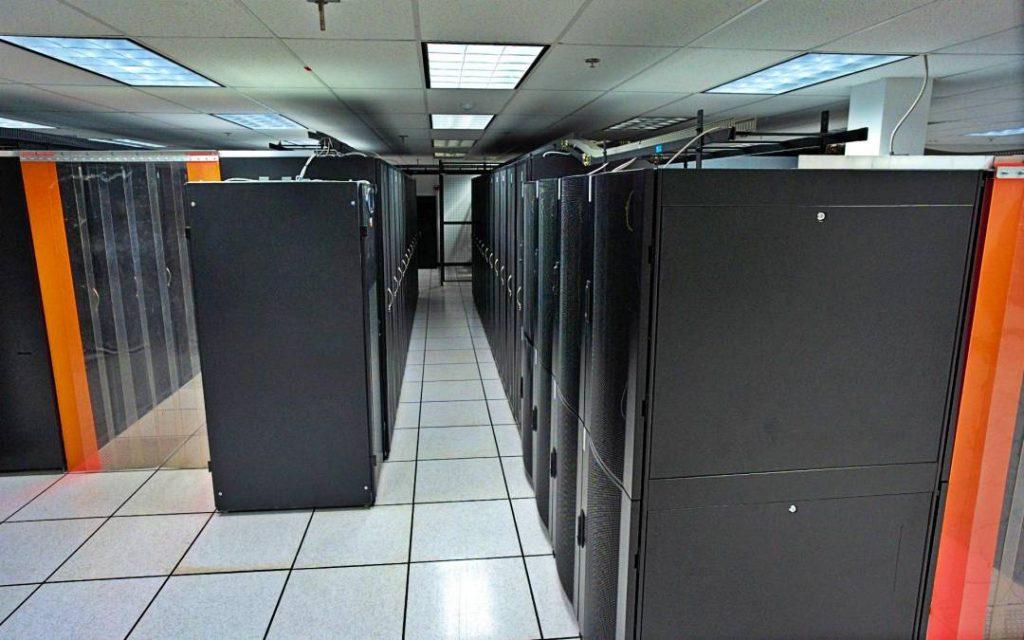
24/7 data center monitoring is the practice of maintaining continuous, automated, human-backed surveillance over power, cooling, networking, security, and physical access systems. The goal is to detect and respond to threats before they cascade into outages. For businesses relying on always-on digital services, this approach has moved from a best practice into a baseline requirement.
Key Takeaways
- Downtime is expensive and getting worse: According to The Network Installers’ 2026 downtime analysis, IT downtime costs most organizations around $9,000 per minute; eliminating every ten-minute detection delay saves roughly $90,000.
- Most serious outages are preventable: Uptime Institute’s annual survey found that four in five operators said their most recent serious outage could have been prevented with better management, processes, and configuration, meaning monitoring gaps, not hardware destiny, drive most failures.
- Attackers time their moves deliberately: VSO’s analysis of Verizon DBIR data shows that a clear majority of ransomware deployments and confirmed intrusions cluster outside standard business hours, making nighttime and weekend monitoring coverage non-negotiable.
- Power and cooling dominate outage causes: Uptime Institute research shows power failures alone account for 36% of the biggest global outages. Automated alerts on UPS status, generator health, and cooling thresholds should be your first monitoring layer.
- The monitoring market is growing fast for a reason: Precedence Research projects the global data center monitoring market will grow from $2.33 billion in 2025 to $11.43 billion by 2034, reflecting broad industry recognition that reactive monitoring is no longer sufficient.
Quick-Start Prioritization Framework
Not every organization needs to build a full network operations center from day one. Start where the risk is highest, then layer additional coverage as budget and complexity allow.
| Strategy | Best For | Effort Level | Time to Results |
|---|---|---|---|
| Automated power and UPS alerting | All organizations, all sizes | Low | Days |
| Temperature and humidity sensor grid | Orgs with on-prem or colo hardware | Low, Medium | Days |
| Network anomaly detection | Businesses with customer-facing services | Medium | Weeks |
| 24/7 human-monitored NOC or managed service | Enterprises with SLA obligations | High | Weeks |
| Predictive AI maintenance monitoring | Large-scale or multi-site operations | High | Months |
Start here if you’re:
- A small or mid-size team: Deploy automated power and temperature alerting first; it covers the two leading outage causes with the least operational overhead, and modern sensors send alerts directly to mobile devices without requiring a staffed console.
- An enterprise or regulated organization: Invest in a managed 24/7 NOC or colocation provider with round-the-clock human oversight, because the ITIC survey shows that in banking, healthcare, and manufacturing, a single hour of downtime can exceed $5 million.
- A business running multi-site or hybrid infrastructure: Prioritize network anomaly detection and centralized DCIM dashboards, since Uptime Institute’s 2025 Outage Analysis links the rise in IT and networking outages directly to increased complexity from cloud and hybrid architectures.
What Can Fail After 5 p.m.
One of the most persistent myths in IT operations is that failures happen randomly. The data says otherwise. Certain categories of incidents cluster in off-hours for structural reasons.
Power Events Don’t Follow Business Schedules
Uptime Institute’s tracking of global public outages since 2016 shows that power failures account for 36% of the biggest incidents on record. Power infrastructure, UPS systems, generators, transfer switches, and utility feeds do not pause for weekends. In fact, scheduled maintenance windows are often pushed to nights and weekends specifically to reduce user impact, which creates a higher-risk window when fewer engineers are watching.
Phoenix NAP’s analysis of outage causes found that power and cooling system failures together cause almost 71% of all data center outages. Alarmingly, four in five respondents in the same research body believed they could have prevented their most recent outage with better management. Continuous power monitoring, tracking load balance, voltage irregularities, UPS battery health, and generator test results in real time, is the single highest-return monitoring investment most organizations can make.
Pro Tip: Configure your power monitoring to alert on rate-of-change, not just threshold breaches. A UPS battery that drains from 100% to 60% in four hours is a sign of a developing problem, even if 60% is technically within spec. Catching the trend early is the difference between a planned replacement and an emergency.
Cooling Failures Compound Silently
Environmental problems, including thermal issues, are linked to nearly 30% of unplanned data center outages, according to industry monitoring data. The insidious quality of cooling failures is their timeline. Exit Technologies’ temperature monitoring research points out that overheating gear can fail weeks or months after sustained thermal stress has already worn down internal components. A rack that runs hot at 2 a.m. every night will not announce itself until the damage is done.
Environmental problems, including thermal issues, are linked to nearly 30% of unplanned data center outages recommend a minimum of six temperature sensors per rack, three at the front and three at the rear, because a single intake sensor can read 70°F while the exhaust side of the same rack runs more than 20 degrees hotter. That blind spot, left unmonitored overnight, represents a slow-moving threat to hardware longevity and uptime alike.
Security Threats Exploit Reduced Staffing
Analysis of multiple years of Verizon’s Data Breach Investigations Report reveals that a clear majority of ransomware deployments and confirmed intrusions cluster outside standard business hours. The explanation is straightforward. Attackers have done the math on when defenders are thinnest, and the math consistently points to nights, weekends, and federal holidays.
The coverage gap compounds through a known dynamic: many internal IT and security teams staff down to a single on-call contact after 6 p.m., if that. Off-hours batch jobs, patch deployments, and scheduled backups also generate network traffic that malicious activity can hide within, making automated anomaly detection a critical layer that human eyes cannot reliably replace.
The Real Cost of Detection Delays
The difference between a minor incident and a major disaster is almost always the size of the detection window. When no one is watching, that window stretches for hours.
How MTTD Drives Total Downtime Cost
Mean Time to Detect (MTTD) is the measurement of how long an issue exists before it is discovered. According to ScienceLogic’s incident management framework, incident measurement should begin as close to the initial failure as possible, not only when someone creates a ticket. Every minute between the failure and the alert is a minute of compound damage.
In practice, real-time monitoring systems are critical for early detection and faster responses, and Splunk’s MTTR analysis confirms that latent fault detection, finding hidden issues before they become failures, is one of the most effective levers for reducing total repair time. An issue caught at 2 a.m. by an automated alert is resolved in minutes. The same issue discovered at 8 a.m. when a user calls to report degraded service may already have caused hours of damage.
What a Six-Hour Window Actually Costs
In my experience reviewing downtime incidents across colocation environments, the problem is rarely the initial failure. It’s the unmonitored hours in which that failure compounds. The Network Installers’ current downtime benchmarks put the cross-industry average at roughly $9,000 per minute of downtime, or $540,000 per hour. A cooling anomaly that develops at midnight and goes undetected until 6 a.m. represents a six-hour exposure window. At those rates, the detection delay alone costs more than $3 million before a single repair action begins.
Uptime Institute’s outage cost data shows that more than half of survey respondents said their most recent significant outage cost more than $100,000, with 16% seeing costs above $1 million. Shrinking the detection window through continuous monitoring directly compresses those figures.
Pro Tip: When evaluating monitoring vendors, ask specifically about their Mean Time to Alert (MTTA), the time between a threshold breach and the notification reaching an on-call engineer. A monitoring system that takes 15 minutes to generate an alert after an event is not providing 24/7 protection in any meaningful sense.
The Four Pillars of Effective 24/7 Monitoring
Organizations with the most resilient data center environments share a common architecture. Their monitoring programs are built on four interlocking layers rather than a single tool.
Pillar 1, Environmental Monitoring
This layer covers temperature, humidity, airflow, and water leak detection. Environmental problems, including thermal issues, are linked to nearly 30% of unplanned data center outages, and relative humidity should be between 45% and 60%. Sensors outside these ranges should trigger tiered alerts: an informational notification at the first threshold and an emergency escalation if the value continues to drift. According to Dataspan’s cooling best-practices research, effective temperature monitoring can cut energy consumption by up to 20% while catching failures earlier.
Pillar 2, Power Infrastructure Monitoring
Power monitoring spans UPS systems, transfer switches, PDUs, generator health, and utility feed quality. Phoenix NAP’s analysis of outage causes, all of which are early warning signs of potential outages. For organizations that operate in financial services, healthcare, or government, where ITIC data shows hourly outage costs top $5 million per vertical, power monitoring is simply table stakes.
Pillar 3, Network and Application Monitoring
In 2024, IT and networking issues were responsible for 23% of impactful outages, a trend that Uptime Institute links directly to the growing complexity of cloud, hybrid, and software-defined architectures. Effective network monitoring tracks packet loss, latency, interface errors, and configuration drift. Automated baselines and anomaly detection allow the system to flag unusual traffic patterns, a capability that human analysts watching a dashboard cannot reliably replicate overnight.
Pillar 4, Physical Security Monitoring
Access logs, badge reader activity, and camera systems round out a complete monitoring program. Physical intrusions during off-hours are a meaningful threat vector, and Advantage Technology’s SOC monitoring research notes that around-the-clock monitoring enables faster alert triage, with on-call analysts able to immediately isolate affected systems or users as threats emerge. Physical and logical security monitoring work best when they share a unified alerting system, so an anomalous badge swipe at 3 a.m. can be correlated with a simultaneous network access attempt.
Managed Monitoring vs. Building In-House
Organizations evaluating their monitoring strategy typically face a build-versus-buy decision.
The Case for Managed 24/7 Monitoring Services
Grand View Research’s data on DCIM managed services shows the managed services segment growing at a projected 19.4% CAGR, driven by a shortage of skilled professionals and the need for continuous 24/7 monitoring in large and complex environments. Managed services offload the staffing challenge entirely. You don’t need to hire overnight engineers, manage shift rotations, or maintain on-call escalation chains.
Providers like Datacate offer around-the-clock facility monitoring as part of their colocation offering, with the facility monitored continuously and SOC 2 Type II and HIPAA compliance baked into the infrastructure. For organizations that need continuous oversight without building a full internal operations team, co-locating in a facility that provides 24/7 monitoring as a baseline is often the most cost-effective path.
The Case for In-House Monitoring Programs
Building an internal monitoring capability makes sense when operational complexity requires deep customization, for example, organizations running proprietary hardware or highly specialized workloads where third-party analysts would need extensive context to respond effectively. The tradeoff is cost: staffing a genuine 24/7 NOC requires a minimum of four to five full-time engineers per monitoring position to cover all shifts, holidays, and turnover. Fact. MR’s data center monitoring market analysis projects the global monitoring market growing at a 10% CAGR through 2035, partly because organizations are choosing managed platforms over internal builds at increasing rates.
Pro Tip: If budget limits a full internal NOC, consider a hybrid model. Automate the tier-one alerting and response playbooks, and use a managed service provider for the after-hours human escalation layer. This approach captures most of the benefit of 24/7 monitoring at a fraction of the cost of full in-house staffing.
Common Monitoring Mistakes That Create Hidden Gaps
In my experience, the most dangerous monitoring failures are the ones that look fine on paper. Here are the patterns to watch for.
Alert Fatigue from Poorly Tuned Thresholds
A monitoring system that generates hundreds of low-priority alerts per day trains engineers to ignore notifications. When a genuine critical alert arrives at 2 a.m., it gets lost in the noise. Thresholds should be reviewed quarterly and tuned to reflect actual operational baselines, not factory defaults.
Assuming the Provider’s Monitoring is Enough
DPS Telecom’s analysis of third-party monitoring risks notes that if equipment sits in a third-party rack, operators need a standalone system that independently tracks temperature, door alarms, and power feeds. Relying on a colocation provider’s internal monitoring alone means you may only learn of a problem after it’s too late to contain the damage. Independent monitoring validates the provider’s claims and gives you an early-warning layer.
Monitoring Only During Change Windows
In 2024, IT and networking issues caused 23% of impactful outages, and 58% of human error-related outages resulted from staff failing to follow established procedures. Many of these failures occur during or immediately after change windows, software patches, firmware updates, or network reconfigurations, which are frequently scheduled overnight. Monitoring coverage should be tightest, not loosest, immediately following any configuration change.
Frequently Asked Questions
What does 24/7 data center monitoring actually include?
Full 24/7 data center monitoring covers environmental systems (temperature, humidity, water detection), power infrastructure (UPS, generators, PDUs), network performance (latency, packet loss, anomalies), physical access controls, and security systems. The most effective programs combine automated alerting software with human analysts available to respond and escalate around the clock.
How much does 24/7 data center monitoring cost?
Costs vary significantly based on scope and delivery model. A managed monitoring service bundled with colocation, like the approach used by providers such as Datacate, is typically far more cost-effective than building an in-house NOC, which requires four to five full-time engineers per monitored position. Automated monitoring tools for smaller environments start in the hundreds of dollars per month, while enterprise managed programs scale into the thousands based on the number of monitored assets and SLA response times.
Why do most data center failures happen outside business hours?
The concentration of incidents in off-hours has two main drivers. First, attackers deliberately target periods when staffing is thinnest. Verizon DBIR data analyzed by VSO shows that ransomware deployments and confirmed intrusions cluster heavily on nights, weekends, and holidays. Second, maintenance windows are pushed to off-hours to reduce user impact, creating a higher-risk period when configuration errors or equipment test failures are more likely to go undetected.
How does continuous monitoring reduce downtime costs?
The primary mechanism is detection speed. ScienceLogic’s incident metrics framework shows that reducing Mean Time to Detect (MTTD) directly compresses total incident cost, since every undetected minute allows failures to compound. At a cross-industry average of $9,000 per minute, a monitoring system that cuts detection time from six hours to six minutes saves roughly $3.2 million in direct downtime costs for a single incident.
What compliance requirements make 24/7 monitoring mandatory?
Several regulatory frameworks effectively require continuous monitoring as a control. HIPAA mandates ongoing review of information system activity, making continuous audit logging and alerting a compliance necessity for healthcare environments. PCI-DSS requires real-time network monitoring for cardholder data environments. SOC 2 Type II audits, like those Datacate maintains at its Rancho Cordova facility, evaluate whether monitoring controls are operating continuously over the audit period, not just during business hours.
The Bottom Line
24/7 data center monitoring catches failures that business-hours coverage structurally cannot. Power anomalies develop at 2 a.m. Cooling systems degrade over weekend nights. Ransomware operators time their deployments to maximize the gap between compromise and detection. The cost of each undetected hour compounds at rates that most organizations cannot afford to sustain.
The good news is that continuous monitoring is achievable at nearly every budget level, from automated temperature and power alerts for smaller environments to fully managed NOC services for enterprises with strict SLA obligations. The first step is closing the gap between when failures begin and when your team learns about them.
If your data center runs critical workloads, the question is not whether you need 24/7 monitoring. The question is whether the monitoring you have right now is actually watching when nobody else is.
Explore Datacate’s colocation and 24/7 monitoring to see how purpose-built infrastructure and continuous oversight work together.
Sources
- ITIC 2024 Hourly Cost of Downtime Survey, Information Technology Intelligence Consulting. Hourly downtime costs by enterprise size and vertical. https://itic-corp.com/itic-2024-hourly-cost-of-downtime-part-2/
- Annual Outage Analysis 2024, Uptime Institute. Outage frequency, costs, and preventability findings. https://intelligence.uptimeinstitute.com/resource/annual-outage-analysis-2024
- Annual Outage Analysis 2025, Uptime Institute. Power, networking, and human error outage trends. https://uptimeinstitute.com/resources/research-and-reports/annual-outage-analysis-2025
- Data Center Outages Are Common, Costly, and Preventable, Uptime Institute. Power failure share and third-party risk data. https://uptimeinstitute.com/data-center-outages-are-common-costly-and-preventable
- IT Downtime Statistics 2026, The Network Installers. Per-minute and per-hour downtime cost benchmarks. https://thenetworkinstallers.com/blog/cost-of-it-downtime-statistics/
- Why Cyberattacks Don’t Wait for Business Hours, VSO. Verizon DBIR analysis of off-hours attack timing. https://vso-inc.com/why-cyberattacks-dont-wait-for-business-hours/
- Data Center Monitoring Market Size to 2034, Precedence Research. Market valuation and CAGR projections. https://www.precedenceresearch.com/data-center-monitoring-market
- Data Center Monitoring Market Analysis 2025-2035, Fact.MR. Market growth and managed services trends. https://www.factmr.com/report/data-center-monitoring-market
- Why Data Center Temperature Monitoring Is Critical, GBC Engineers. ASHRAE sensor placement guidelines and environmental outage rates. https://gbc-engineers.com/news/data-center-temperature-monitoring
- Data Center Temperature Monitoring Best Practices, Exit Technologies. Thermal stress, rack density, and sensor strategy. https://exittechnologies.com/blog/data-center/data-center-temperature-monitoring-challenges-and-best-practices/
- Data Center Power Outage: Causes and Prevention, Phoenix NAP. Power and cooling share of outage causes. https://phoenixnap.com/blog/data-center-power-outage
- 2024 Outage Trends, DPS Telecom. Third-party monitoring risks and independent sensor guidance. https://www.dpstele.com/blog/2024-outage-trends.php
- 2025 Data Center Outage Report, DPS Telecom. Human error and IT/networking outage trends. https://www.dpstele.com/blog/2025-outage-report-changing-risks.php
- Data Center Cooling Best Practices, Dataspan. Energy savings from temperature monitoring optimization. https://dataspan.com/blog/data-center-cooling-best-practices/
- DCIM Managed Services Market, Grand View Research. Managed services CAGR and staffing shortage drivers. https://www.grandviewresearch.com/industry-analysis/data-center-infrastructure-management
- Importance of 24/7 Monitoring in a SOC, Advantage Technology. Continuous monitoring, threat triage, and isolation capabilities. https://www.advantage.tech/the-importance-of-24-7-monitoring-in-a-security-operations-center-soc/
- MTTR vs MTTA vs MTTD, ScienceLogic. Incident detection and repair lifecycle metrics. https://sciencelogic.com/blog/mttr-vs-mttar-vs-mttd-incident-management-metrics
- Datacate Colocation Services, Datacate, Inc. 24/7 facility monitoring and compliance overview. https://www.datacate.net/colocation/