For decades, Silicon Valley held the data center world in an almost mythological grip. Any serious operator wanted a presence in Santa Clara or Sunnyvale, full stop. But in 2026, that conventional wisdom is rapidly unraveling. The narrative is shifting: developers are increasingly looking beyond the Bay Area to alternative markets, driven by rising costs, power shortages, and evolving workload requirements. The result is a growing realization that one Sacramento-area city – Rancho Cordova – quietly checks every box that Silicon Valley no longer can.
This is not a niche opinion. It is a data-driven case. Silicon Valley now costs US$13.3 per watt to build a data center, ranking it among the most expensive construction markets globally – driven primarily by local factors surrounding land availability and workforce dynamics. Meanwhile, a purpose-built Rancho Cordova datacenter offers proximity to the Bay Area, dramatically lower power costs, superior seismic safety, and a government actively courting tech investment. In my experience evaluating colocation options across Northern California, few locations offer this combination of strategic and operational advantages in a single package.
Whether you are an IT manager weighing your first colocation contract, a CFO scrutinizing operational spend, or a business owner trying to make sense of your infrastructure options, this guide will walk you through every dimension of the Rancho Cordova vs. Silicon Valley comparison – so you can make an informed decision with confidence.
Key Takeaways
- Power costs are dramatically lower: Compared to the San Francisco Bay Area, Sacramento’s cost of power through SMUD is up to 50% less, meaning every megawatt-hour your Rancho Cordova datacenter consumes costs roughly half what a Silicon Valley operator pays. If you are running any meaningful workload, this difference alone justifies a serious site-selection review.
- Silicon Valley’s power crisis is real and worsening: In the heart of Silicon Valley, two freshly built data centers designed for the world’s most power-hungry computing workloads are standing empty. Acute power constraints and grid interconnection bottlenecks are effectively closing these primary markets to new, large-scale development. Therefore, if you need guaranteed power delivery on a near-term timeline, Rancho Cordova is a far safer bet.
- Seismic risk is measurably lower: According to the USGS, there is a probability of less than 0.78% of a 6.7-magnitude or higher earthquake in Sacramento over the next 50 years, whereas San Jose and San Francisco have a 56% and 32% chance, respectively, of a high-magnitude earthquake in this period. Data center uptime depends on physical resilience, so choose your location accordingly.
- Latency to Bay Area users remains negligible: The data latency between Sacramento and the San Francisco Bay Area is less than 3 milliseconds, well within the threshold for virtually every enterprise application, including synchronous database replication.
- Rancho Cordova is investing aggressively in tech infrastructure: The Rancho Cordova City Council approved up to $5 million to launch an AI & Robotics Ecosystem, partnering with NVIDIA and SMUD to build the region into a premier technology destination. Your datacenter investment here rides that wave.
Quick-Start Prioritization Framework
Not every organization has the same starting point. Use this table to identify which advantages of a Rancho Cordova datacenter matter most for your specific situation, then follow the “Start here if you’re” guidance below.
| Factor | Rancho Cordova Advantage | Silicon Valley Reality | Effort to Switch | Time to Benefit |
|---|---|---|---|---|
| Power cost | Up to 50% lower via SMUD | Among the highest in the U.S. | Low (colocation contract) | Immediate |
| Power availability | SMUD met demand 100% in 2024 | Facilities are sitting idle due to a lack of power | Low | Immediate |
| Seismic risk | <0.78% chance of major quake (50 yr) | 56% chance (San Jose) | Low | Immediate |
| Land/build cost | $13.3/W vs. Silicon Valley benchmark | $13.3/W – highest in U.S. | Med (facility selection) | Near-term |
| Latency to the Bay Area | <3ms round trip | 0ms (on-site) | Low | Immediate |
| Regulatory environment | City actively courting tech | Power moratoriums, permitting delays | Low | Near-term |
| Tech ecosystem | Growing AI/robotics hub | Mature but saturated | Med | Long-term |
Start here if you’re:
- A cost-conscious SMB or mid-market company: Focus on power and colocation pricing. The SMUD rate advantage delivers immediate savings with zero infrastructure investment on your part. Look at purpose-built colocation providers like Datacate, whose Rancho Cordova facility is specifically designed for this market.
- An enterprise with disaster recovery requirements: Lead with the seismic risk and power reliability data. Rancho Cordova functions as an ideal secondary or DR site for any Bay Area primary location.
- A Bay Area company evaluating your first colocation: Start with the latency section. Once you confirm the sub-3ms round trip, the cost and risk arguments close the case almost automatically.
The Silicon Valley Power Crisis: Why the Old Model Is Broken
Built Facilities Sitting Dark
The story of Silicon Valley’s power crisis is not theoretical. Two major facilities built for AI-era workloads remain unpowered while the city races to expand its electricity supply. These are not planned or proposed buildings – they are completed structures waiting for electricity that the grid cannot yet deliver.
The bottleneck is no longer the technology within the data center but the infrastructure that powers it. While AI accelerators and liquid cooling systems advance on a monthly cycle, the lead times for essential grid components like high-voltage transformers have stretched to 2-4 years, and new high-voltage transmission lines can take over a decade to permit and build. In practical terms, this means you could sign a lease in Santa Clara today and wait years before your racks are powered. Therefore, if timeline certainty matters to your business, Silicon Valley is structurally unreliable in 2026.
Rising Costs With No Ceiling in Sight
Silicon Valley land prices have skyrocketed to where the cost is now approaching $4.4 million per acre – more than $100 per square foot in some areas. These costs flow directly downstream to colocation tenants through higher rack rates and reduced flexibility. In Silicon Valley, volume-based pricing discounts for large tenants have been significantly reduced or eliminated amid strong demand, intensifying pricing pressures.
Pro Tip: When evaluating colocation pricing in Silicon Valley vs. Rancho Cordova, always ask providers for an all-in cost per kW per month, not just rack pricing. Power, cooling, cross-connects, and bandwidth uplift charges can add 30-40% to Silicon Valley’s headline rate.
Permitting and Regulatory Uncertainty
The number of data centers under construction is not expected to reach new highs in 2026. Many projects remain stalled in the planning stage due to permitting, zoning, and power procurement challenges. This stagnation is especially acute in Silicon Valley, where community opposition and environmental review processes routinely extend timelines by 18 months or more. Silicon Valley Power’s 4% rate increase took effect in January 2026, adding yet another layer of cost pressure for operators and tenants alike.
The Power Advantage: SMUD vs. Silicon Valley Power
A Utility Built Differently
The Sacramento Municipal Utility District (SMUD) is not a typical investor-owned utility with a profit motive and shareholder returns to satisfy. As a community-owned, not-for-profit electric service provider, SMUD works to ensure its rates are consistently among the lowest in California. That structural difference has measurable consequences for data center operators.
Sacramento electricity remains relatively affordable. SMUD’s 2025 system average is 17.28¢/kWh, while its average rate for large commercial users above 1,000 kW is 12.75¢/kWh. Compare that to the Bay Area: for a typical large commercial customer, San Jose power costs work out to about 28.5¢/kWh under SJCE’s March 2026 rate comparison, based on 27,431 kWh of usage – that remains above California’s recent commercial average of 25.54¢/kWh.
For a data center consuming 1 MW of power continuously, the annual difference between a 12.75¢/kWh rate (SMUD large commercial) and a 28.5¢/kWh rate (San Jose) amounts to approximately $1.38 million in energy savings alone, which covers the cost of many other infrastructure investments.
Reliability That Operators Can Count On
Power cost matters little if the power is unreliable. As of March 31, 2025, SMUD reported 3,443 MW of total resources. In its 2024 reliability report, SMUD said it met customer energy supply needs 100% of the time, and 98.7% of distribution circuits met reliability criteria. That is not marketing copy; it is a utility’s published performance record.
The Rancho Cordova data center market leverages robust metro fiber infrastructure and utility feeds from Sacramento Municipal Utility District to provide highly reliable, edge colocation. The combination of a non-profit utility with an unbroken delivery record and a low-seismic-risk physical environment creates a resilience profile that Silicon Valley’s power-constrained market simply cannot match in 2026.
Clean Energy Credentials
Sustainability is an increasingly material factor in enterprise IT procurement, with ESG reporting requirements now touching most mid-market companies. SMUD’s power supply was about 62% carbon-free in 2024, and its 2030 Zero Carbon Plan remains in place, giving Sacramento colocation facilities access to a cleaner power mix while keeping electricity costs competitive. SMUD currently has more than 55% carbon-free electric generation and will have more than 75% carbon-free generation by 2030, making it one of the most renewably-sourced utilities in California.
Pro Tip: If your organization has a net-zero or carbon reduction commitment, confirm with your colocation provider whether they offer 100% renewable energy options through SMUD’s green tariff programs. This can strengthen ESG reporting without adding material cost.
Seismic Safety: The Risk Nobody Talks About Until It’s Too Late
The Numbers From USGS
Earthquake risk is the category in which Rancho Cordova’s advantage over Silicon Valley is most dramatic and most frequently overlooked during site selection. The top risks in Silicon Valley include earthquakes. Silicon Valley and the Bay Area have been called tectonic time bombs. The Hayward fault runs through some of the most populated areas of the Bay Area, from San Pablo Bay to Milpitas.
According to the USGS, there is a less than 0.78% probability of a magnitude 6.7 or higher earthquake in Sacramento over the next 50 years, whereas San Jose and San Francisco have a 56% and 32% chance, respectively, of a high-magnitude earthquake in this period. Think about what those numbers mean in business continuity terms: a Silicon Valley data center has a better-than-even chance of experiencing a major earthquake before a 50-year-old company retires its founder. Therefore, any serious disaster recovery or business continuity plan should account for this risk, and Rancho Cordova is the natural answer.
What “Low to Moderate Seismic Area” Means for Operations
The Rancho Cordova data center market is ideally situated in a low-to-moderate seismic area for California, ensuring high service reliability. This classification has real-world implications: lower seismic insurance premiums, simpler structural engineering requirements for new builds, and fewer regulatory restrictions on equipment placement and facility design.
While Sacramento faces a lower risk of severe seismic shaking than the Bay Area or Southern California, the identification of liquefaction zones on preliminary seismic hazard maps underscores the importance of earthquake preparedness and mitigation for development and planning in the region. Responsible operators, including well-run colocation providers, will have site-specific geotechnical information for any facility in the area. The key point is that this due diligence is manageable; the same process in Silicon Valley confronts far more hazardous baseline conditions.
Pro Tip: When touring any data center in Rancho Cordova, ask specifically whether the facility sits within a FEMA-designated 500-year floodplain. Some campus locations in the area are outside this boundary, providing an additional layer of protection for uptime-critical deployments.
Connectivity: Sub-3ms Latency to the Bay Area
Dispelling the Distance Myth
The most common objection to a Rancho Cordova datacenter from Bay Area-based organizations is latency: “We need to be close to our users and our cloud on-ramps.” In my experience, this objection dissolves almost immediately when actual latency figures are examined.
The data latency between Sacramento and the San Francisco Bay Area is less than 3 milliseconds. To put this in context, most synchronous database replication tolerates a maximum of 5-10 milliseconds of round-trip latency, meaning a Rancho Cordova primary or secondary data center can maintain synchronous replication with a Bay Area site with latency to spare.
If you think latency is just a technical metric, you are missing the bigger picture. In AI-powered industries, shaving milliseconds off inference times directly impacts conversion rates, customer retention, and operational safety. The good news: if you are in the same metro area, well-engineered fiber can make latency a non-issue for most applications. Sacramento and Rancho Cordova, served by diverse fiber routes, qualify.
Fiber Infrastructure Supporting Rancho Cordova Datacenters
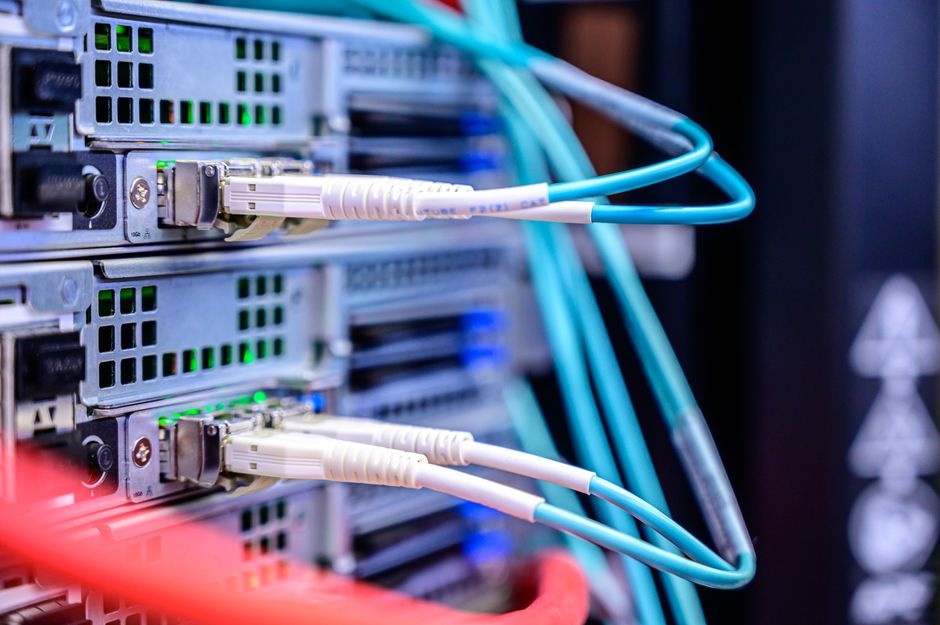
Rancho Cordova data centers are in close proximity to major fiber-optic networks and internet exchange points, facilitating high-speed data transfer and low-latency connections, making them an ideal choice for businesses requiring fast and reliable access to cloud services, content delivery networks, and real-time data processing capabilities.
Strategically positioned about 13 miles from downtown Sacramento and roughly 30 minutes from Sacramento International Airport, the site benefits from strong metro fiber infrastructure and reliable power from the Sacramento Municipal Utility District. Multiple Tier 1 long-haul and metro fiber providers serve the corridor, and carrier-neutral facilities allow tenants to choose among providers rather than being locked into a single vendor’s routing table.
Local data centers offer high-speed, low-latency connectivity options through direct fiber connections or peering arrangements with major internet service providers (ISPs). These connections can provide superior data packet routing and significantly reduce the time it takes for data to travel to and from your systems. As Datacate’s own research on latency shows, the physical proximity of a Sacramento-area data center to Bay Area business operations eliminates the primary performance argument for maintaining colocation in Silicon Valley.
Pro Tip: Request a latency test from any Rancho Cordova colocation provider to your specific application endpoints before signing. Responsible providers will run this test and show you the results. Anything under 5ms to Bay Area endpoints for a latency-sensitive workload is entirely workable for most enterprise use cases.
The Rancho Cordova Tech Ecosystem: A City Building Momentum
From State Capital Satellite to Tech Destination
For many years, Rancho Cordova was understood primarily as a government-adjacent employment center: logical, stable, but not exciting. That narrative is now changing with measurable investment behind it.
Rancho Cordova is one of the largest employment centers in the Sacramento region, with a continually expanding workforce of 65,000+. The city’s Economic Development Department focuses on supporting its business community with resources and services, as well as helping new businesses and projects find homes in Rancho Cordova.
Rancho Cordova is taking bold steps to establish itself as a premier artificial intelligence and technology hub, fueled by the expansion of Solidigm, a global leader in data storage solutions for AI applications. This is not a press release aspiration; the city is writing checks to back it up.
The AI and Robotics Ecosystem Investment
The Rancho Cordova City Council approved up to $5 million to launch the AI & Robotics Ecosystem, a bold initiative designed to turn the power of technology into jobs, education, and reinvestment for local residents. The partners assembled for this initiative are not placeholder names. The Ecosystem plans to harness collaboration that includes the Human Machine Collaboration Institute (HMCI), NVIDIA, Solidigm, FarmGPU, and SMUD.
The City of Rancho Cordova has developed a three-year Economic Development Strategic Plan and implementation roadmap to further sustainable and inclusive economic growth in the city for 2025-2028. This policy continuity matters for data center operators: when a city commits to a multi-year technology growth plan, it signals zoning cooperation, permitting support, and workforce pipeline development – all of which reduce operational friction for data center tenants.
The practical implication for businesses evaluating a Rancho Cordova datacenter is this: you are not just buying rack space. You are positioning your infrastructure in a city that is actively building the economic ecosystem around you. While Silicon Valley and Los Angeles data center markets dominate California, Sacramento has emerged as the state’s third-largest market, and the trajectory is decisively upward.
Scalability and Physical Infrastructure
Room to Grow Without Breaking the Bank
One of the most structural differences between Rancho Cordova and Silicon Valley is the availability of land, and what that means for your ability to scale. Colocation providers in Silicon Valley have been forced to rethink their designs and focus on vertical expansion to offset land costs. The majority of new construction data centers built in Silicon Valley are now three or four-floor facilities with raised floors for colocation. Vertical builds are more expensive to engineer, more complex to cool, and harder to expand without major capital expenditure.
In Rancho Cordova, the footprint is expansive. Carrier-neutral data centers in the area operate with thousands of square feet of single-level raised floor space in seismically stable Sacramento. Horizontal campus-style builds mean simpler cooling architectures, easier cable management, and straightforward power distribution, all of which reduce both CapEx and ongoing OpEx for operators and tenants alike.
Scalability is a significant advantage offered by Rancho Cordova data centers. Whether businesses require basic colocation services or comprehensive cloud computing solutions, these facilities can scale infrastructure resources according to business needs. This flexibility enables businesses to expand their operations seamlessly by leveraging robust data management solutions, without the complexities and costs of maintaining proprietary data centers.
Datacate’s Rancho Cordova Facility
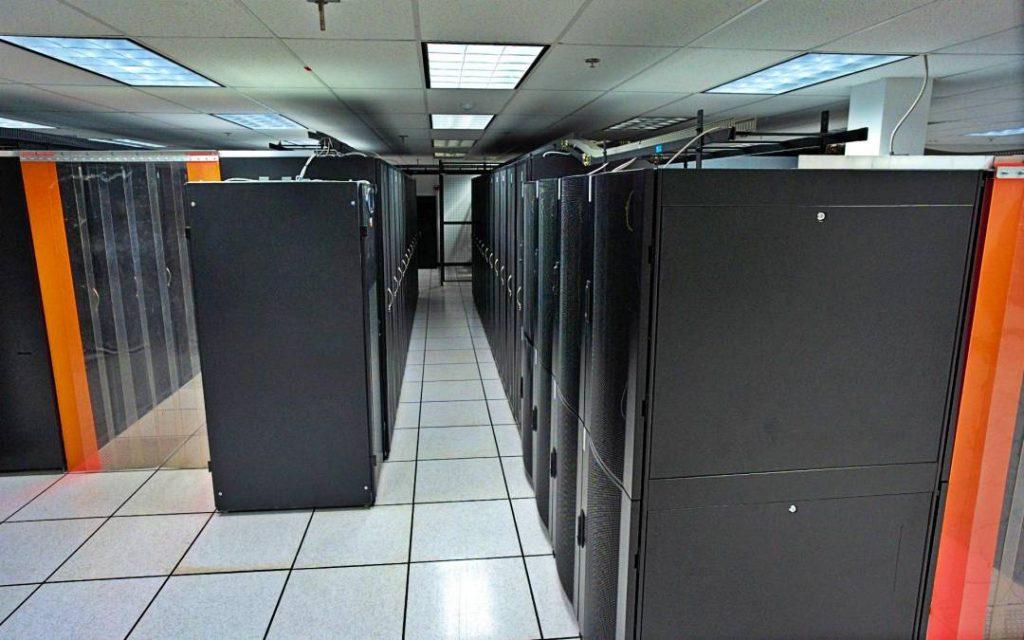
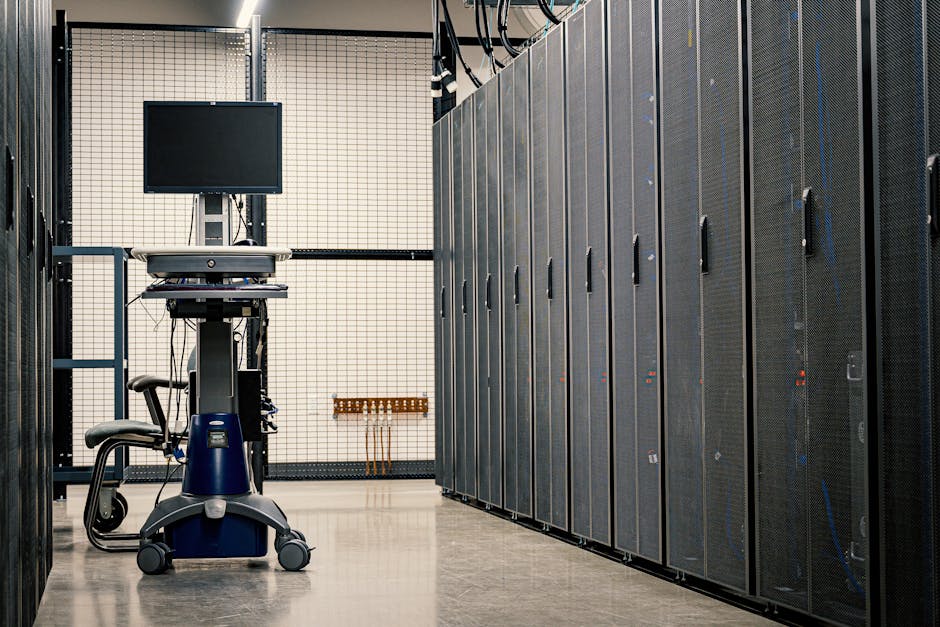
Among the colocation providers serving the Rancho Cordova market, Datacate operates a purpose-built facility at 2999 Gold Canal Drive, a strategic address in the heart of Rancho Cordova’s business corridor. Located at 2999 Gold Canal Dr, Rancho Cordova, CA, Datacate’s SMF1 Data Center offers 18,000 sq ft of space with 1.4MW power expansion capacity, showcasing energy efficiency and advanced cooling systems. This facility provides a secure, scalable platform for colocation, cloud solutions, and managed IT services, helping businesses achieve optimal performance and growth.
Datacate’s Rancho Cordova facility is purpose-built to provide a secure, efficient, and high-performance environment for data infrastructure that meets the most demanding industry standards. For organizations that need managed services layered on top of colocation, including HaaS, PaaS, and cloud integration, Datacate’s local presence in the Sacramento market provides direct, responsive support that hyperscale providers rarely offer at this scale.
Common Mistakes When Evaluating Datacenter Location
Mistake 1: Treating Silicon Valley as the Default
The single most costly mistake organizations make in datacenter site selection is treating Silicon Valley as the obvious answer without running a rigorous comparison. In the past, companies were willing to pay a premium for proximity to headquarters and engineering talent. Today, the drivers have changed: scalable land, affordable renewable energy, and favorable tax environments outweigh the need to build next door to corporate campuses. If your assumptions were formed five years ago, they need to be revisited.
Mistake 2: Equating Distance With Latency
Many IT decision-makers use geographic distance as a proxy for network latency. This is technically imprecise and often leads to poor decisions. It is the law of physics that light propagation on a fiber-optic network introduces a constant latency of approximately five microseconds per kilometer. One straightforward way to minimize latency is to use the shortest fiber connection between the computing platform and the user. But “shortest fiber” is not the same as “nearest city.” Rancho Cordova’s direct fiber routes to Bay Area exchange points deliver sub-3ms latency, making the geographic difference operationally irrelevant for most workloads.
Mistake 3: Ignoring Power Reliability as a Risk Factor
From 2025 onward, the bottleneck has migrated from the server rack to the substation. The focus is now on systemic grid failures, with U.S. interconnection queues delaying projects for years and utility providers warning of regional capacity shortages as early as 2026. Power availability is now officially the primary constraint to new construction. Evaluating a data center without a detailed power reliability assessment, including utility redundancy, backup generation, and UPS sizing, is negligent planning in 2026. SMUD’s track record makes this due diligence straightforward for Rancho Cordova facilities.
Mistake 4: Underweighting Seismic Risk in Business Continuity Plans
Using information from recent earthquakes, improved mapping of active faults, and new probability models, the 2014 Working Group on California Earthquake Probabilities concluded there is a 72 percent probability of at least one earthquake of magnitude 6.7 or greater striking the Bay Area within 30 years. Yet many business continuity plans treat seismic risk as a footnote rather than a primary site-selection criterion. Bottom line: if your primary data center is in Silicon Valley, your disaster recovery site should not be.
Pro Tip: When building a DR strategy around a Rancho Cordova secondary site, confirm that synchronous replication latency between your primary Bay Area location and your Sacramento facility stays under 5ms. With the fiber infrastructure in place, this is routinely achievable and should be tested before go-live, not after.
The Broader Market Context: Secondary Markets Are Winning
A Global Trend Validated by Data
The case for Rancho Cordova does not rest only on local factors; it is reinforced by macro trends reshaping the entire data center industry. The global data center colocation market was valued at USD 64.6 billion in 2025 and is expected to grow from USD 71.7 billion in 2026 to reach USD 155.9 billion by 2034, growing at a CAGR of 10.3% during the forecast period. Growth at this scale requires new capacity, and new capacity is flowing to markets where power, land, and permitting friction are manageable.
Operators chase places that balance land costs, climate, utility availability, and connectivity. Some markets win because they are close to users. Others win because cooler weather can trim cooling costs. Rancho Cordova benefits from both proximity to 8+ million Bay Area users and California’s Central Valley climate, which reduces cooling load compared to inland desert markets.
The wholesale colocation and hyperscale market is no longer confined to Silicon Valley or the major metros. In 2026, the digital economy’s backbone is increasingly distributed. Developers are pursuing scalable, energy-rich, and cost-effective sites to meet the next decade of compute demand. Rancho Cordova sits at the exact intersection of those three criteria.
Sacramento’s Position in California’s Data Center Hierarchy
Silicon Valley and Los Angeles are the dominant data center markets in California, followed by Sacramento and San Diego. Sacramento’s third-place ranking understates its trajectory: the Sacramento market is growing from a lower base, which means more available capacity, more competitive pricing, and more responsive providers than the saturated primary markets above it.
For example, Prime Data Centers is building a second data center in Sacramento, California. The new data center will be built next to its existing Building-1 in the McClellan Park campus – Building-1 is an 8 MW facility that is fully leased. When a leading operator’s first Sacramento facility sells out and triggers a second build, that is a market signal worth paying attention to.
Pro Tip: The Sacramento and Rancho Cordova data center market still has meaningful available capacity in 2026; a stark contrast to Silicon Valley’s constrained inventory. If you are evaluating a move, acting before this capacity tightens will give you better pricing and more favorable contract terms.
Frequently Asked Questions
What makes a Rancho Cordova data center better than Silicon Valley for most businesses?
The combination of lower power costs (up to 50% less through SMUD), dramatically lower seismic risk, available land for expansion, and sub-3ms fiber latency to Bay Area endpoints means Rancho Cordova delivers the same connectivity and reliability as Silicon Valley at substantially lower total cost of ownership. Rancho Cordova data centers play a critical role in supporting the digital transformation and growth of businesses in California and beyond, with strategic location, advanced security measures, energy-efficient operations, and scalable solutions providing a reliable foundation for businesses’ digital infrastructure needs.
How far is Rancho Cordova from the Bay Area, and does distance affect network performance?
Rancho Cordova sits in the heart of its largest business park, less than 100 miles from San Francisco. Network latency over that distance on well-engineered fiber is under 3 milliseconds, which is well within the performance threshold for synchronous database replication, real-time applications, and cloud connectivity. The physical distance becomes operationally irrelevant for the vast majority of enterprise workloads.
Is SMUD power reliable enough for mission-critical datacenter operations?
Yes. As of March 31, 2025, SMUD reported 3,443 MW of total resources. In its 2024 reliability report, SMUD said it met customer energy supply needs 100% of the time, and 98.7% of distribution circuits met reliability criteria. Mission-critical deployments should also verify that any colocation provider they select offers generator backup, dual utility feeds, and UPS systems; infrastructure that reputable Rancho Cordova operators maintain as standard.
What is the earthquake risk for a Rancho Cordova datacenter compared to Silicon Valley?
The Rancho Cordova data center market is ideally situated in a low to moderate seismic area for California, ensuring high service reliability. The USGS places the probability of a 6.7 magnitude or higher earthquake over the next 50 years at less than 0.78% in Sacramento, versus 56% for San Jose and 32% for San Francisco. For business continuity planning purposes, this difference is among the most significant site-selection factors available.
Can a Rancho Cordova datacenter support disaster recovery for a Bay Area primary site?
Absolutely, and this is one of the most compelling use cases. Most synchronous replication tolerates maximum 5-10 milliseconds round-trip latency, and Rancho Cordova to Bay Area latency runs under 3ms over established fiber routes. The combination of low latency, independent seismic risk zone, separate SMUD utility grid, and lower cost makes Rancho Cordova the ideal DR site for Bay Area primary deployments.
How does the Rancho Cordova market compare in terms of available colocation capacity?
Unlike Silicon Valley, which faces constrained inventory and power queues stretching years into the future, the Rancho Cordova market retains meaningful available capacity in 2026. Sacramento has 22 data centers that businesses can choose from. This competitive environment benefits tenants through better pricing, more flexible contract terms, and more responsive service than heavily saturated markets can offer.
What should I look for when choosing a colocation provider in Rancho Cordova?
Look for facilities with high-speed fiber connections and multiple peering arrangements. Check if the data center offers HaaS, PaaS, or other managed services that meet your needs. Choose a provider with a strong uptime, security, and customer support track record. Also, verify the generator capacity, UPS redundancy, cooling architecture, and the provider’s relationship with SMUD to ensure power delivery reliability. Providers like Datacate offer these services in a purpose-built Rancho Cordova facility designed for demanding enterprise workloads.
The Bottom Line: Why Location Is Your Most Consequential Infrastructure Decision
We’ve found that when organizations conduct a rigorous, data-driven comparison of Rancho Cordova and Silicon Valley, rather than relying on legacy assumptions or brand familiarity, Rancho Cordova wins on nearly every measurable criterion that matters for a 2026 IT budget. Power cost, power reliability, seismic safety, land availability, regulatory momentum, and latency-adjusted connectivity all point in the same direction.
Silicon Valley’s role has evolved from the center of the data center universe to a key node in a much larger, distributed ecosystem. That evolution is not a criticism of Silicon Valley; it is a recognition that the market has matured to the point where the premium no longer buys what it once did. For most organizations, the cost of that premium cannot be justified when a purpose-built Rancho Cordova datacenter delivers equivalent connectivity and superior resilience at a fraction of the cost.
The global colocation market is projected to reach USD 155.9 billion by 2034 according to Straits Research. The organizations that position their infrastructure in cost-efficient, power-stable, low-seismic-risk markets today will compound those advantages over every year of that growth cycle. Rancho Cordova is one of those markets.
To learn more about how a Rancho Cordova datacenter can serve your organization’s specific needs, explore Datacate’s colocation and managed service offerings. Datacate provides purpose-built solutions for the Sacramento-area market with a track record of serving businesses that have made exactly this transition.
Sources
- Rancho Cordova Data Centers Overview – Datacenters.com. Comprehensive listing and analysis of Rancho Cordova data center advantages, connectivity, and scalability. https://www.datacenters.com/locations/united-states/california/rancho-cordova
- 365 Data Centers Rancho Cordova – 365 Data Centers. Facility details including SMUD power feeds, seismic positioning, and metro fiber infrastructure. https://365datacenters.com/rancho-cordova-data-center/
- Datacate SMF1 Sacramento Data Center – Datacate, Inc. Facility overview including colocation, cloud solutions, and managed IT services. https://www.datacate.net/colocation/rancho-cordova-ca/
- Silicon Valley Colocation Market Analysis – Datacenters.com. Land pricing, construction costs, seismic risk, and market dynamics. https://www.datacenters.com/news/silicon-valley-colocation-market-analysis-providers-data-centers-and-pricing
- North America Data Center Trends H2 2025 – CBRE Research. Silicon Valley pricing pressures, AI workload demand, and supply constraints. North America Data Center Trends H2 2025
- Data Centre Construction Cost Index 2025 – Turner & Townsend. Global construction cost benchmarks including Silicon Valley at US$13.3/W. https://reports.turnerandtownsend.com/data-centre-construction-cost-index-2025/data-centre-cost-trends
- Why Sacramento Is a Great Data Center Location – Prime Data Centers. USGS seismic probability data, SMUD power cost comparisons, and latency measurements. https://primedatacenters.com/news/why-sacramento-is-the-best-data-center-site-in-california/
- SMUD Rate Information – Sacramento Municipal Utility District (official). Current commercial and residential rate structures. https://www.smud.org/Rate-Information
- Data Centers in California: Colocation in the Golden State – Brightlio. SMUD rate benchmarking, Sacramento market capacity, and San Jose power cost comparisons. https://brightlio.com/california-data-centers-brightlios-ultimate-guide-to-colocation-in-the-golden-state/
- Why Developers Are Leaving Silicon Valley for Rural Data Center Markets – Datacenters.com. Analysis of cost drivers pushing data center growth to secondary markets. https://www.datacenters.com/news/are-developers-leaving-silicon-valley-for-rural-markets
- Silicon Valley Data Centers Stand Empty Awaiting Power Connections – Data Center Dynamics. Report on idle facilities in Santa Clara due to grid constraints. Silicon Valley data centers stand empty awaiting power connections
- Data Center Power Crisis 2026: The Grid Bottleneck – Enki AI. Analysis of grid interconnection delays and power constraints in primary markets. https://enkiai.com/data-center/data-center-power-crisis-2026-the-grid-bottleneck/
- Rancho Cordova AI & Robotics Ecosystem – Folsom Times. City Council’s $5M commitment to AI and tech hub development. https://folsomtimes.com/rancho-cordova-commits-5m-million-into-big-tech-ai-and-robotics-growth/
- Major AI Company Expands in Rancho Cordova – Expansion Solutions Magazine. Solidigm expansion and city’s technology hub strategy. https://www.expansionsolutionsmagazine.com/major-ai-company-expands-in-rancho-cordova-california/
- Rancho Cordova Economic Development – City of Rancho Cordova (official). Workforce statistics and economic development programs. City of Rancho Cordova Economic Development
- California Data Center Upcoming Projects 2026 – Blackridge Research. Sacramento campus expansions and statewide colocation market context. https://www.blackridgeresearch.com/blog/latest-list-of-upcoming-data-centers-in-california-united-states-us
- **Data Center