Every second your data spends traveling to a distant server is a second your customers are waiting. For Sacramento businesses operating in an increasingly competitive digital environment, that delay carries real dollar consequences. A one-second page delay can cut conversions by 7%, potentially costing businesses millions in lost revenue. Edge computing offers Sacramento companies a direct path out of that problem: move data processing physically closer to where it is generated and consumed.
Sacramento has evolved into a secondary tech hub in California, offering lower living costs while still delivering prime opportunities in software development, cybersecurity, and cloud computing. That growing digital footprint means local businesses are generating more data than ever before – and putting more strain on traditional cloud infrastructure. This guide explains what edge computing is, why latency matters for your bottom line, and how organizations in Sacramento can take practical steps toward faster, more resilient operations.
Key Takeaways
- Latency costs real money: Akamai research shows that a 1-second delay correlates with a 7% decline in conversion rates. For a business posting daily sales of $100,000, that amounts to $7,000 in lost revenue per 24-hour cycle. If your site is slow, audit your infrastructure before any other marketing fix.
- Edge processing is measurably faster: Edge computing reduces latency by two to ten times compared to cloud-based alternatives. While cloud computing often introduces delays of 30-60 milliseconds, edge processing can achieve response times as low as 5-10 milliseconds. Build toward sub-10ms targets for any customer-facing application.
- The market is accelerating fast: The global edge computing market was estimated at $21.4 billion in 2025 and is expected to grow from $28.5 billion in 2026 to $263.8 billion in 2035, at a CAGR of 28%. Businesses that adopt early gain a structural advantage over slower competitors.
- Small and mid-sized businesses are a primary growth segment: The small and medium enterprise segment is projected to have the highest edge computing growth rate from 2025 to 2033, driven by digital transformation initiatives across SMEs aiming to improve agility and enhance customer experience, with edge enabling local data processing and reducing dependency on centralized cloud infrastructure.
- Security and compliance improve locally: Local data processing enables better adherence to privacy regulations such as GDPR and HIPAA, while real-time threat response allows edge devices to detect and respond to threats instantly.
Quick-Start Prioritization Framework
| Strategy | Best For | Effort Level | Time to Results |
|---|---|---|---|
| Colocation in a local data center | Any business with on-premise servers | Low | Days to weeks |
| Edge node deployment for customer-facing apps | Retail, hospitality, healthcare | Medium | 2-6 weeks |
| Hybrid edge-cloud architecture | Growing SMBs, multi-site businesses | Medium | 1-3 months |
| Full edge infrastructure build-out | Logistics, manufacturing, healthcare | High | 3-12 months |
| Edge-as-a-service subscription | Micro-businesses, single-location shops | Low | Days |
Start here if you are:
- A small Sacramento business with one location: Start with colocation or edge-as-a-service – lowest cost, fastest results, no major IT overhead required.
- A mid-sized business with latency-sensitive customer interactions: Deploy edge nodes for specific customer-facing applications first, then expand to a hybrid architecture.
- A multi-site enterprise or healthcare organization: Plan a hybrid edge-cloud build-out with compliance as a core design requirement from day one.
What Edge Computing Actually Means for Your Business
The Basics Without the Jargon
Edge computing achieves lower latency by fundamentally reshaping how and where data is processed. Rather than relying on distant cloud servers, it empowers local nodes to handle tasks close to the user, enabling faster response times. Think of it like this: instead of sending a question from Sacramento to a server in Virginia and waiting for the answer to travel back, edge computing places a small, capable server right here in the region. The round trip shrinks from thousands of miles to a few city blocks.
Edge computing brings computation and storage closer to the data source – whether that is a sensor, a point-of-sale system, or a smart camera. Instead of sending every request to a central cloud server, local data processing allows businesses to analyze and act on information right at the edge of the network. For a Sacramento retailer, that means checkout systems that respond instantly, inventory dashboards that update in real time, and a seamless customer experience.
How It Compares to Traditional Cloud
Cloud computing centralizes your infrastructure in remote data centers for massive scalability and computing power, while edge computing processes data near the source to reduce latency and enable real-time responses. Neither replaces the other; they work best together.
Companies adopting edge computing are not abandoning centralized infrastructure. They are building hybrid architectures in which edge locations handle latency-sensitive processing, while centralized facilities manage workloads that benefit from consolidation. The practical implication: keep your business analytics and long-term storage in the cloud, but move anything that needs an instant response to the edge.
Pro Tip: Start by identifying your three most latency-sensitive operations – for most Sacramento businesses, these are customer checkout, appointment booking, and real-time inventory. Fix those at the edge first. Everything else can stay in the cloud for now.
The Latency Numbers Sacramento Businesses Need to Know
What the Milliseconds Actually Mean
Edge computing offers latency between 1-10 milliseconds, while cloud computing typically ranges from 50 milliseconds to over 200 milliseconds. That gap sounds technical until you tie it to user behavior. Recent research reveals that 53% of users abandon sites taking longer than 3 seconds to load, while optimized sites see conversion rate improvements of 5-61% and revenue increases of 15-53%. If your Sacramento business runs any kind of online booking, e-commerce, or customer portal, this data demands action.
47% of users expect a website to load in two seconds or less. If your current infrastructure cannot consistently deliver that, edge deployment should be on your roadmap for this year – not next year.
The Cost of Doing Nothing
Retail sites lose $2.6 billion annually due to slow load times. That aggregate number reflects thousands of individual businesses hemorrhaging a share of their revenue due to preventable delays. Bounce rates can increase by 32% if load times reach three seconds. For a Sacramento restaurant booking page or a local medical clinic’s appointment portal, a bounce rate spike of that scale could represent dozens of missed customers every single day.
In my experience working with local infrastructure decisions, most business owners are surprised to learn that latency problems are not a website design issue; they are an infrastructure geography issue. Fixing the design without moving the processing closer to your users produces only marginal gains.
Real-World Edge Computing Applications for Sacramento Industries
Retail and Hospitality
Compact micro data centers and plug-and-play edge services allow small retailers to benefit from real-time analytics, inventory optimization, and digital signage without needing extensive IT staff or infrastructure. A Sacramento boutique running an IoT-connected inventory system, for example, can process stock-level updates locally rather than round-tripping data to a distant cloud, reducing both delays and bandwidth costs.
The retail industry uses edge computing in stores and warehouses to reduce costs and improve efficiency. Amazon, for example, demonstrated an improved version of its “Just Walk Out” technology that uses AI software deployed on edge computing devices to provide a contactless shopping experience in stores. Sacramento’s diverse retail sector, from the downtown grid to Roseville shopping corridors, stands to gain directly from these same principles applied at a local scale.
Healthcare Clinics and Medical Practices
In healthcare facilities, edge computing can enhance telemedicine services, support wearable health devices, and enable predictive maintenance of medical equipment. Securely processing sensitive patient data at the edge ensures compliance with privacy regulations while optimizing resource utilization. For Sacramento’s robust network of regional hospitals, specialty clinics, and community health centers, this matters both as an improvement in patient experience and as a HIPAA compliance strategy.
Gartner predicts that 75% of enterprise data will be processed at the edge. Industries such as healthcare, finance, and industrial IoT must comply with evolving standards and regulations such as HIPAA, PCI DSS, and ISO 27001. Processing patient data locally at a Sacramento-area edge facility removes the compliance risk that comes with sensitive records traveling over the public internet.
Logistics and Distribution
Sacramento sits at the intersection of major Northern California freight corridors, making it a natural fit for edge-enabled logistics. For maritime and logistics operations supporting retail supply chains, edge processing on trucks, yards, and ports can reduce delays by updating status at the point of movement rather than waiting for backhaul connectivity.
Common use cases include real-time monitoring, local analytics, predictive maintenance, and IoT-driven automation in retail stores, factories, healthcare facilities, hotels, and logistics operations. Sacramento’s warehousing and distribution businesses can deploy edge nodes at their facilities to gain live visibility into operations without dependence on cloud uptime.
Pro Tip: For logistics businesses, focus your first edge deployment on tracking and routing data. These are high-frequency, time-sensitive data streams where milliseconds directly translate to on-time delivery rates.
Security and Compliance Advantages of Local Processing
Keeping Sensitive Data in the Region
One underappreciated benefit of edge computing is its impact on data security. By processing data locally, edge computing solutions significantly reduce the need to transmit data to central clouds, which not only minimizes latency but also enhances data security by limiting exposure to potential cyber threats.
Keeping sensitive data at the source helps ensure organizations maintain compliance with government laws and industry regulations. Data compliance is particularly crucial in sectors with strict data privacy and governance requirements, such as finance and healthcare. For Sacramento businesses handling patient records, payment data, or government contracts, local processing is as much a compliance posture as a performance strategy.
Resilience When Connectivity Drops
Edge computers process data locally offline without cloud dependence, and remote locations can maintain reliable connectivity, ensuring critical processes are disruption-free. This matters in Sacramento’s context of periodic wildfire-related power events and regional network disruptions. A business running edge infrastructure can continue processing point-of-sale transactions, monitoring security systems, and logging operations even during a cloud connectivity outage.
Pro Tip: Build your edge deployment with offline resilience in mind from day one. An edge node that gracefully queues and syncs when cloud connectivity returns is far more valuable than one that simply fails over to slower cloud processing.
How Sacramento’s Data Center Ecosystem Supports Edge Adoption
A Growing Regional Infrastructure Base
As the capital of California, Sacramento is considered one of the country’s top up-and-coming markets for data centers. This emerging industry has created a competitive environment that benefits businesses seeking colocation partners. Sacramento’s data centers have access to reliable network and fiber infrastructure, with various telecommunications companies, including AT&T Fiber, Xfinity, Consolidated Communications, Comcast, and Verizon, providing high-speed internet and fiber-optic connections to businesses.
That fiber density is the backbone of effective edge deployment. Lower physical distance to a well-connected edge facility means lower latency, and Sacramento’s improving connectivity infrastructure makes local edge deployments more capable than they were just a few years ago.
Datacate: Sacramento’s Local Edge Colocation Option
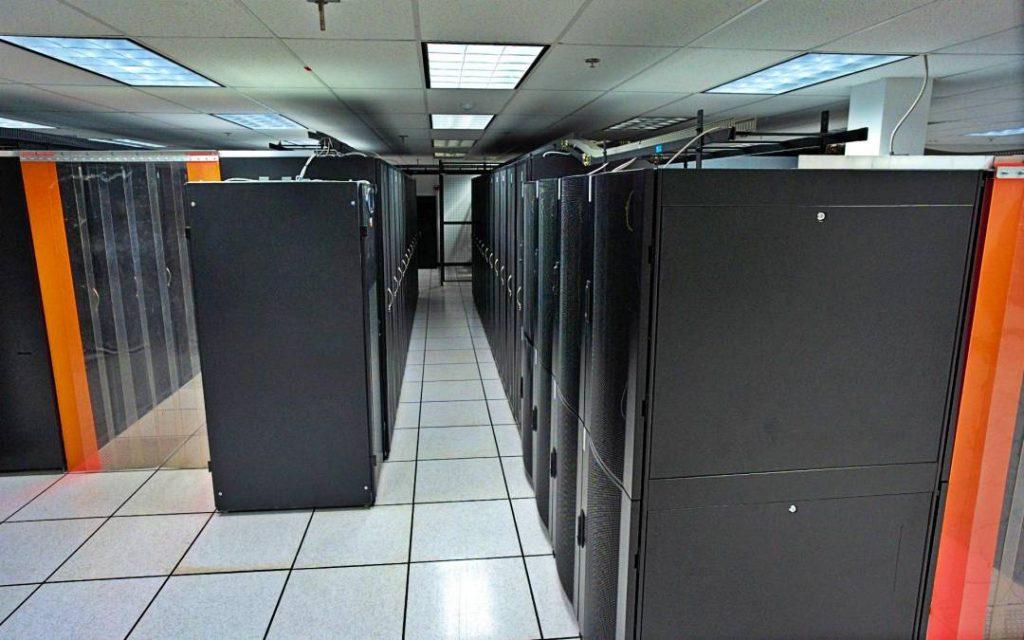
For Sacramento businesses looking to bring infrastructure closer to home, Datacate’s Rancho Cordova data center offers a purpose-built option right in the Sacramento metro. Located at 2999 Gold Canal Drive in Rancho Cordova, Datacate’s SMF1 data center offers 18,000 square feet of space with up to 1.4MW of power capacity, showcasing energy efficiency and advanced cooling systems, providing a secure, scalable platform for colocation, cloud solutions, and managed IT services.
Scalable colocation solutions, ranging from individual server racks to dedicated private cages and suites, allow clients to quickly scale their physical footprint as needs change. HIPAA, SOC 2 Type II, SOC 3, and CSA STAR compliance ensure a secure, compliant environment for all data and service types. For healthcare providers and financial services firms, those certifications remove a major barrier to adopting the local edge.
We’ve found that Sacramento businesses often overlook colocation as an edge strategy, assuming it requires major capital investment. In practice, placing a handful of servers in a local certified facility like Datacate can deliver meaningful latency reductions on a budget that most SMBs can absorb.

Common Mistakes to Avoid When Adopting Edge Computing
Treating Edge as an All-or-Nothing Decision
The most effective digital strategies now incorporate both approaches, using edge computing where speed, reliability, and bandwidth efficiency matter most, while using cloud resources for heavy computational tasks and centralized management. Businesses that rip out their cloud infrastructure in favor of a pure edge model typically create new problems while solving old ones. Start with a hybrid approach.
Skipping the Workload Audit
Not every application benefits from edge deployment. If your system still depends on a central database or API, edge will not automatically fix latency. Before you invest in edge hardware or colocation space, map your workloads and identify which ones are genuinely latency-sensitive. Point-of-sale, live customer portals, and IoT monitoring almost always qualify. Batch reporting and long-term analytics almost never do.
Underestimating Security Complexity at the Edge
Gartner predicts that 75% of enterprise data protection, zero-trust models, and quantum encryption are shaping the future of secure infrastructure. As data processing shifts closer to users, security risks become more complex, demanding a proactive approach. Each edge node is a potential attack surface. Build a zero-trust security model into your edge deployment from the start, not as an afterthought once you have already onboarded workloads.
Frequently Asked Questions
What is edge computing in simple terms?
Edge computing moves data processing from distant cloud servers to locations near where data is created, such as a local server in your building or a colocation facility in your city. Latency refers to the delay between a user’s action and a system’s response. In cloud-centric environments, data often travels long distances to centralized servers, creating round-trip delays that impact user experience. Edge computing cuts that distance to near zero.
How much does edge computing cost for a small Sacramento business?
Costs vary widely depending on the approach. Edge-as-a-service subscriptions can start at a few hundred dollars per month. Colocation at a Sacramento-area facility like Datacate is typically priced per rack unit or cage, and Datacate’s pricing page positions it as among the best-value options in the region. A full on-premises edge node build-out will cost more, but businesses that already run on-premises servers can repurpose existing hardware.
Is edge computing secure enough for healthcare or financial data?
Edge computing is often more secure than cloud alternatives because data is processed locally, meaning sensitive information does not need to leave the premises. This helps companies stay compliant with privacy regulations and minimizes the risk of data breaches. Sacramento healthcare providers should confirm that any edge facility they use is HIPAA compliant. Datacate’s facility, for example, holds HIPAA attestation alongside SOC 2 Type II compliance.
Will edge computing replace our existing cloud setup?
Edge computing complements the cloud. The edge handles time-sensitive tasks, while the cloud can still be used for model training, data aggregation, and long-term analytics. A strong architecture combines both. Most Sacramento businesses benefit most from a hybrid model – edge for speed and compliance, cloud for scale and storage.
How do I know if my business actually has a latency problem?
Run a baseline test using Google’s PageSpeed Insights or a tool like GTmetrix. If your customer-facing pages score below “Good” on Core Web Vitals, or if your point-of-sale or booking system noticeably lags during peak hours, you have a latency issue worth addressing. When every millisecond counts, even small delays, known as cloud latency, can disrupt transactions, slow decision-making, or frustrate customers. The fix starts with understanding where your data is being processed today.
Ready to explore edge computing options in the Sacramento area? Datacate offers tours of its Rancho Cordova facility and can help Sacramento businesses evaluate colocation, managed hosting, and hybrid cloud options that put your data closer to your customers.
Sources
- How Edge Computing Reduces Latency for End Users in 2025 – Eastgate Software. Overview of edge architecture and latency reduction mechanisms. https://eastgate-software.com/how-edge-computing-reduces-latency-for-end-users-in-2025/
- How Does Edge Computing Reduce Latency for End Users – OTAVA. Practical breakdown of edge vs. cloud latency. How Edge Computing Reduces Latency for End Users
- Edge Computing vs Cloud: Latency Impact – Firecell. Millisecond-level comparisons of edge vs. cloud response times. https://firecell.io/edge-computing-vs-cloud-latency-impact/
- Edge Computing Benefits for Local SMBs Explained – Virtual IT. IDC forecast data and SMB use cases. https://govirtual-it.com/blog/how-edge-computing-helps-local-businesses/
- Edge Data Centers: The Complete Guide – Netrality. Infrastructure architecture and hybrid edge-cloud models. https://netrality.com/blog/edge-data-centers-complete-guide/
- Edge Computing Market Size & Share, Growth Trends 2026-2035 – Global Market Insights. Market sizing and CAGR projections. https://www.gminsights.com/industry-analysis/edge-computing-market
- Edge Computing Market Size & Share Report, 2026-2033 – Grand View Research. SME segment growth and software trends. The small and medium enterprise
- Top 10 Tech Companies to Work for in Sacramento in 2025 – Nucamp. Sacramento tech landscape overview. https://www.nucamp.co/blog/coding-bootcamp-sacramento-ca-top-10-tech-companies-to-work-for-in-sacramento-in-2025
- Edge Computing vs Cloud Computing: Key Differences Explained – DigitalOcean. Architectural comparison and use case guidance. https://www.digitalocean.com/resources/articles/edge-computing-vs-cloud-computing
- Sacramento, California – A Top Choice for Data Centers – Brightlio. Sacramento data center market and infrastructure overview. https://brightlio.com/sacramento-data-center/
- Datacate Data Center Facility – Rancho Cordova, CA – Datacate, Inc. Facility specifications and compliance certifications. https://www.datacate.net/gcdc-facility/
- Website Load Time Statistics for 2026 – Hostinger. Conversion rate and user behavior data. https://www.hostinger.com/tutorials/website-load-time-statistics
- Website Load Time Statistics – WebsiteSpeedy. Akamai conversion rate and revenue impact data. https://websitespeedy.com/blog/website-load-time-statistics/
- Security Advantages of Edge Computing – Simply NUC. Data privacy, compliance, and threat detection benefits. Local data processing enables
- Top 10 Edge Computing Use Cases – N-iX. Industry-specific applications in healthcare, retail, and logistics. https://www.n-ix.com/edge-computing-use-cases/
- Edge Computing Use Cases: Retail, Manufacturing – Scale Computing. Multi-industry deployment scenarios and operational benefits. https://www.scalecomputing.com/resources/edge-computing-use-cases
- Edge Computing to Boost Security Now and in the Future – INFORMS Analytics Magazine. Compliance, scalability, and offline resilience analysis. Edge computers process data locally
- Edge Computing Explained: Benefits & Future Trends – ValueCoders. Bandwidth cost reduction and latency improvement statistics. https://www.valuecoders.com/blog/cloud-services/what-is-edge-computing-everything-you-need-to-know/