Let’s talk about that room at the end of the hall; you know, the “server closet.” It’s probably a bit too warm, hums at a frequency that gives the accounting department a headache, and is currently held together by a prayer and a consumer-grade UPS that hasn’t been tested since 2019.
For years, the “experts” have been telling you that the solution is simple: throw it all away. They want you to migrate every single byte to the public cloud, shut down the closet, and live in a world of pure OPEX bliss.
But here’s the reality: for most mid-sized businesses, a 100% cloud migration isn’t just a technical challenge; it’s a financial and operational nightmare. You’ve spent tens of thousands of dollars on high-performance hardware that still has years of life left. Trashing that investment feels wrong because, frankly, it is.
At Datacate, we see many companies caught in the “all-or-nothing” trap. You feel like you’re either stuck with a dusty closet or forced into an expensive cloud contract. But there is a middle ground: a way to modernize your infrastructure, gain cloud-like flexibility, and keep your high-performance hardware working for you.
We call it The Hybrid Bridge.
The “Office Closet” Bottleneck
The problem usually isn’t the servers themselves; it’s where they live. Your office was designed for people, not for high-density computing.
When you run mission-critical hardware in a closet, you’re fighting an uphill battle against several enemies:
- Thermal Stress: Most office AC units aren’t built to run 24/7/365. When the office air conditioning shuts off for the weekend to save power, your servers start to bake.
- Power Instability: A localized power flicker can corrupt databases or knock your team offline for hours.
- Connectivity Gaps: Your office internet probably isn’t “carrier-grade.” If a backhoe hits a line down the street, your remote workers are dead in the water.
- Physical Security: Is your server room also where you keep the extra toner and holiday decorations? If so, your physical security is effectively zero.
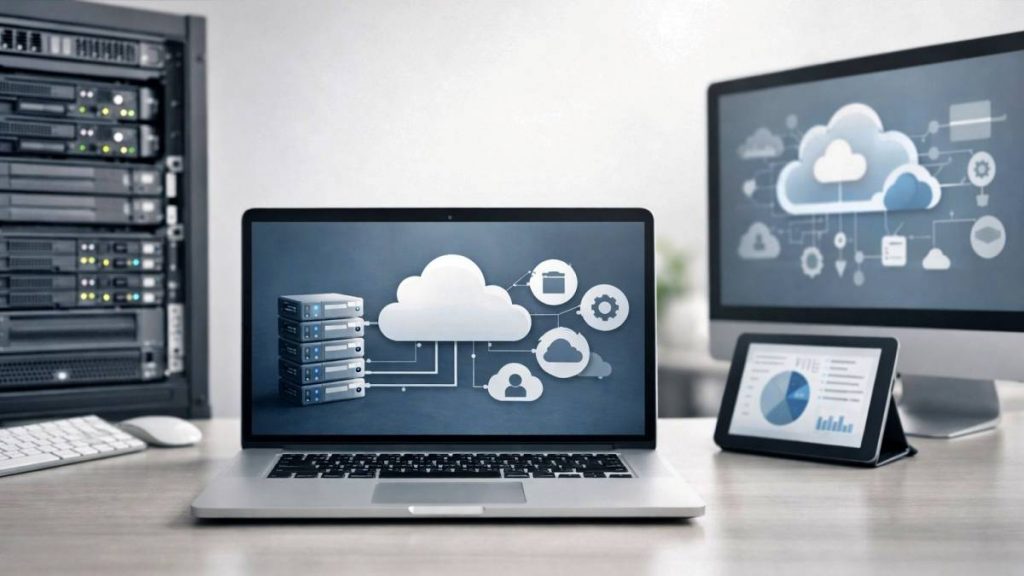
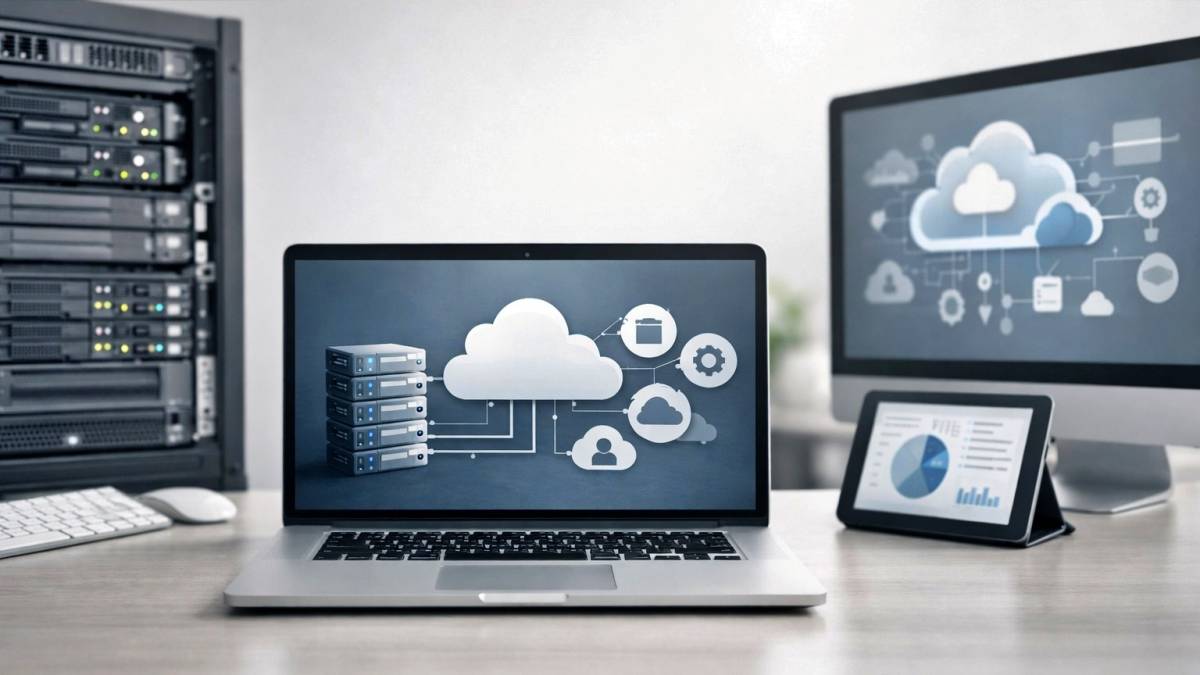
The Hybrid Bridge solves this by taking your existing high-performance local hardware and moving it out of the closet and into a professional data center.
Why Trashing Your Hardware is a Bad Strategy
There’s a prevailing myth that the cloud is always cheaper. If you’re a startup with zero assets, the cloud is a great place to begin. But if you already own your gear, the math changes quickly.
When you move everything to the public cloud, you aren’t just paying for the “compute”; you’re paying for the convenience, the cooling, the power, and a massive markup on every gigabyte of data that leaves their network (the dreaded egress fees).
If you have a server that’s only three years old, it’s still a powerhouse. It doesn’t need to be replaced; it just needs a better home. By moving that hardware into a Datacate rack, you retain the CAPEX value of your equipment while gaining access to a Tier 3 environment usually reserved for tech giants. This is a core part of our process for helping businesses scale sensibly.
How the Hybrid Bridge Works
The “Bridge” part of this strategy is about connectivity. Modernizing doesn’t mean moving your hardware and leaving it on an island. It means integrating that physical hardware into your cloud-based workflow.
Here is the implementation strategy:
1. The Physical Move (Colocation)
You pull your servers from the closet and rack them in our secure facility. Immediately, you gain redundant power, industrial-grade cooling, and 24/7 physical security. Your hardware will actually last longer because it’s finally living in a temperature-controlled, dust-free environment.
2. High-Speed Connectivity
We don’t just give you a power outlet. We connect your rack directly to the internet backbone. We can establish dedicated, low-latency pipes between your physical hardware and your cloud instances (like AWS, Azure, or your SaaS applications).
3. Creating the Unified Network
Through site-to-site VPNs or direct cross-connects, your physical servers and your cloud apps act as if they are in the same room. You can keep your heavy-lifting databases on your own hardware (no egress fees!) while running your front-end web apps or email in the cloud.
The Best of Both Worlds: Performance and Scalability
The “Win” here is simple: you get the performance of local, dedicated hardware without the liability of maintaining the facility it sits in.
- For the CFO: You avoid a massive, unbudgeted “lift and shift” migration cost. You maximize the ROI of the hardware you already bought.
- For the IT Manager: You are no longer a “facilities manager.” No more worrying about the AC failing at 2 p.m. on a Saturday. You can focus on managed services and high-level strategy rather than swapping out blown power strips.
- For the End User: Applications run faster. When your high-performance gear is sitting on a carrier-grade network, latency drops and uptime skyrockets.
Implementation: A Case Study
Imagine a mid-sized architecture firm. They have 20TB of CAD files and high-resolution renderings. Moving that 20TB to a public cloud would be expensive, and accessing those massive files over a standard office internet connection would be painfully slow for their designers.
Their “closet” was overheating, and they were worried about a fire.
The Hybrid Bridge Solution:
- They move their existing storage servers and rendering nodes to a Datacate rack.
- They keep their email and project management tools in the cloud (SaaS).
- We set up a high-speed, secure bridge between their office and the data center.
The result? The designers got “local-speed” access to their files, the hardware was safe and cool, and the monthly bill was a fraction of what a full cloud migration would have cost. They modernized their infrastructure without trashing a single piece of hardware.
Is It Time to Cross the Bridge?
We aren’t “cloud-haters.” In fact, we help businesses integrate cloud services every day. But we are “waste-haters.” We believe that a reliable IT strategy should be practical, not just trendy.
If your office closet is holding you back, you don’t need a sledgehammer; you need a bridge. You can have the security, the uptime, and the scalability of the cloud while still owning your core infrastructure.
It’s about being smart with your resources. It’s about recognizing that the “middle ground” is often the most profitable place to be.
How to Get Started
Modernizing your infrastructure doesn’t have to happen all at once. The first step is an audit of what you have. Which servers are still performing? Which ones are actually ready for the scrap heap?
From there, we can review pricing for rack space and connectivity. Often, the cost of moving your gear to a professional datacenter is less than the cost of the electricity and extra cooling you’re currently burning through in your office.
Don’t let your hardware go to waste just because the “office closet” is a bottleneck. Let’s talk about building a bridge that works for your budget and your performance needs.
Ready to see what a Hybrid Bridge looks like for your business? Get a quote request started today, or reach out to us for a consultation. We’ll help you move out of the closet and into the future, without trashing your investment.